×
Check-out the new Famous Trials website at www.famous-trials.com:
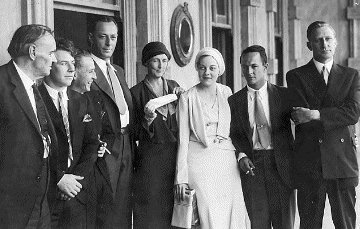
| February 14, 1911 |
Grace and "Roly"
Fortescue (Roly was the illegitimate son of Teddy Roosevelt's uncle)
give birth to their first child, Thalia. |
| November 1927 |
Thalia marries
Thomas Massie, a young naval cadet, in Washington D.C. |
| May 1930 |
Thomas Massie is
assigned to the Submarine Squadron Four, based at Pearl Harbor in
Honolulu. |
| Summer 1931 |
Thalia, pregnant, is
diagnosed with preclamsia and loses her baby. She seeks
counseling from a psychologist. The psychologist concludes that
Thalia's "personal and emotional problems" are so serious as to require
treatment by a psychiatrist. |
| September 12, 1931 |
Thalia and Thomas
Massie attend a "Navy Night" Saturday dance at the Ala Wai Inn in the
Waikiki District of Honolulu. Thalia leaves the party without
Thomas shortly before midnight. |
| September 13, 1931 |
Just before 1 a.m.,
Thalia stops a car on Ala Moana Boulevard. She has a broken jaw
and scuffed cheeks. She is picked up and driven home.
Although Thalia first claims to have been assaulted, she later tells
police she was gang-raped by four or five Hawaiians. Honolulu
police, following up on another police report, arrest and then
interrogate five suspects. |
| September 15, 1931 |
The Star-Bulletin and the Advertiser, Honolulu's two leading
newspapers, launch what will be a relentless front-page campaign for
the
conviction of the five alleged rapists. |
| Early October 1931 |
Thalia's mother,
Grace Fortescue, arrives in Honolulu. |
| October 17, 1931 |
The five alleged
rapists plead not guilty. |
| November 16, 1931 |
The rape trial,
titled Territory of Hawaii v. Ben
Ahakuelo et al., opens in Honolulu. |
| November 18, 1931 |
Thalia Massie
testifies for the prosecution at the rape trial. |
| November 23, 1931 |
The prosecution
rests in the rape case. |
| December 1, 1931 |
Closing arguments
begin in the Massie rape trial. |
| December 6, 1931 |
Jury deliberations
in the rape trial end without a verdict and a mistrial is
declared. The final vote is 6 for conviction and 6 for
acquittal. (Across most of the nation, the failure of the jury to
convict is greeted with alarm.) |
| January 5, 1932 |
From Honolulu,
Admiral Stirling sends an excited cable to Washington urging the naval
fleet stay from Hawaii unless the governor takes certain special
steps to control the native population. Governor Judd sends a
cable to Washington suggesting the situation in the islands was not
nearly so bad as reported in the press. Grace Fortescue and
Thomas Massie, meanwhile, begin acting on a plan to kidnap one of the
alleged rapists and--they hope--extract a confession. |
| January 7, 1932 |
Grace, Thomas
Massie, and two enlisted men (Deacon Jones and Edward Lord) work out
the details of a plan to kidnap Joe Kahahawai after he completes his
scheduled daily visit to his probation officer at the courthouse. |
| January 8, 1932 |
Shortly after 8
a.m., Kahahawai is kidnapped and taken Grace Fortescue's home.
Kahahawai is sharply questioned, and then shot and killed. (It is
not known who fired the gun. The defense will suggest Thomas
Massie, but other evidence suggests it was Deacon Jones.) Kahahawai's
naked body is stuffed in a Buick and driven in the direction of the
Halona Blowhole, a perfect place to dispose of bodies. Police
spot the car as it approaches the ocean and arrest the occupants: Grace
Fortescue, Thomas Massie, and Edward Lord. Deacon Jones is found
at the murder scene and picked up for questioning. The prisoners
are housed in luxurious surroundings aboard a ship in dock at Pearl
Harbor. Soldiers and sailors are confined to posts as concerns of violence and rioting spread. |
| January 10, 1932 |
More Hawaiians turn
out for the funeral of Joe Kahahawai than for any funeral since the
death of the last queen of Hawaii in 1917. Mainland newspapers
began reporting stories on the killing; reports paint a picture of an
island threatened by a race war. |
| January-February 1932 |
Congress holds
hearings to address what is considered to be a national security
emergency in the militarily important island of Hawaii. |
| January 21, 1932 |
A grand jury
convenes to decide whether to issue indictments for the murder of
Kahahawai. |
| January 26, 1932 |
On a 12 to 8 vote,
after receiving pressure to act from Judge Albert Cristy, the grand
jury returned an indictment for second degree murder against Grace
Fortescue, Thomas Massie, Edward Lord, and Deacon Jones. |
| January 29, 1932 |
At the arraignment,
Judge Cristy sets the bail for each defendant at $50,000. He
agrees to lower bail and allow the defendants to remain lodged in navy
quarters after receiving assurance from the secretary of the navy that
the arrangement won't be used to facilitate an escape. |
| February 28, 1932 |
Clarence Darrow, age
74 and retired for years, agrees to represent the murder defendants. |
| March 24, 1932 |
A large crowd turns
out in Honolulu to welcome America's most celebrated defense attorney
to the islands. |
| April 4, 1932 |
Jury selection
begins in the Kahahawai murder trial opens in Honolulu . The
presiding judge is Charles Davis. The prosecution is lead by John
Kelley. Few people want to serve as jurors in the highly
controversial trial. |
| April 7, 1932 |
After over 100
prospective jurors are examined, a jury of seven whites, three
Chinese, and two Hawaiians is selected. |
| April 11, 1932 |
Prosecutor Kelley
gives the state's opening argument. The prosecution calls its
first witnesses. |
| April 14, 1932 |
The prosecution
rests after calling its final witness, Joe Kahahawai's mother.
After a recess, Darrow waives his opening statement and calls his first
witness, Thomas Massie. It becomes apparent that Darrow is planning to
make temporary insanity the defense. |
| April 15, 1932 |
Darrow is too hung
over to attend court and the day's session is canceled. |
| April 16, 1932 |
Darrow announces
that "evidence will show Massie...held the gun in his hand from which
the fatal shot was fired." (In fact, Deacon Jones was the more
likely shooter.) Massie testifies that after Kahahawai said
(after intense questioning by him and other defendants) "Yes, we done
it", he remembered nothing of what happened at the Fortescue house on
the day of the murder. |
| April 19, 1932 |
Darrow calls the
first of his two psychiatric witnesses. |
| April 20, 1932 |
The defense rests
after dramatic testimony from Thalia Massie. |
| April
25, 1932 |
Rebuttal testimony
(mostly from psychiatric witnesses) ends. |
| April 26, 1932 |
Closing arguments
begin in the Kahahawai murder trial. |
| April 27, 1932 |
Clarence Darrow
delivers the last closing argument of his half-century legal
career. The argument is carried live on radio stations across the
country. Jury deliberations begin. |
| April 29, 1932 |
The jury finds the
defendants guilty of manslaughter. Almost immediately, calls for
pardons begin reaching Governor Judd. |
| May 3, 1932 |
Judge Davis
sentences the defendants to 10 years in prison, but Governor Judd
commutes the sentence to one hour in the
custody of the sheriff. The defendants spend the night
celebrating their freedom at a Chinese restaurant. |
| May 7, 1932 |
Grace Fortescue,
Thomas and Thalia Massie, and Clarence and Ruby Darrow board an ocean
liner for San Francisco. |
| October 3, 1932 |
A 273-page report
from the Pinkerton Detective Agency on the Massie case is presented to
Governor Judd. The report concludes that Thalia Massie was not
raped. |
| February 13, 1933 |
Prosecutor Kelley
announces that all rape charges against those initially charged in the
Thalia Massie case are being dropped. |
| February 23, 1934 |
Thalia Massie files
for divorce in Reno. |
| July 2, 1963 |
Thalia Massie dies
in Palm Beach from an overdose of barbiturates. |
| 1966 |
In a book (Something Terrible Has Happened) published by a writer for LOOK magazine, Deacon Jones admits that Joe Kahahawai never confessed to having raped Massie after his abduction. Jones also admits that he shot "the black bastard" because he "had no use for him." Jones said it was Darrow's idea to "let Tommie take the rap" for the killing. |