×
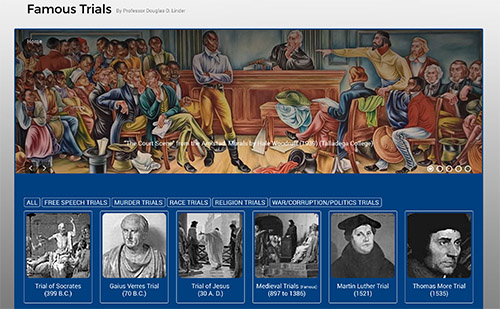
Check-out the new Famous Trials website at www.famous-trials.com:
|
In
response to my specific questions, she did say that she had some
testimony as
to the curtains and as to the location of Mrs. Weaver which I think
would be
extremely useful, and in discussions with counsel, we have said that if
the
subcommittee would limit our inquiries to those matters that Sara would
be
willing to testify. And I have consulted with Senator Kohl and Senator
Feinstein, and that is agreeable to the subcommittee, so we would like
to
proceed at this time to call Sara forward for a few questions, if that
is
satisfactory. Please
remain standing, cause our procedures require you to take an oath. Do
you
solemnly swear that the testimony that you will give to this
subcommittee will
be the truth, the whole truth and nothing but the truth, so help you,
God? Ms.
WEAVER: Yes. Senator SPECTER. Please identify yourself by
name and residence, and tell
us your age. TESTIMONY
OF SARA WEAVER, GRAND JUNCTION, IA: Ms
WEAVER: My name Sara Weaver, and I am 19 years old, and I live
in Senator SPECTER. Ms. Weaver, you obviously
have been present during the
proceeding' today and have heard the testimony of your father; correct? Ms
WEAVER: Uh-huh, Senator SPECTER. When we spoke a few moments
ago in the waiting room in the
rear, you stated that you had some recollection of what you had
observed with
respect to the location of the curtains on the windows, which could be
important in terms of visibility of Special Agent Horiuchi. Ms.
WEAVER. Yes, Senator SPECTER. What did you observe on or
about August
21— 22, 1992? Ms.
WEAVER. I remember the curtains
being pulled back. I
mean, they were always pulled back. We
never closed them at night. They were always pulled back. I remember specifically,
after my mom was shot, we
got her in the house, and the first thing we did was close every
curtain in the
house because we
were
scared that they could see in and that
they might try shooting at us. So I
specifically remember having to close the curtains on the door. Senator SPECTER. And when
you closed the curtains,
what was the condition of the curtain prior to the time you closed it? Ms. WEAVER. That, I don't
remember. I just remember
having to close the curtains. Senator SPECTER. Well, are
you certain as to what
the status of the curtain was prior to the time you closed the curtains? Ms. WEAVER. I'm sure they
were pulled back farther,
especially the one on the right; I'm sure they were pulled back farther
than
what they are now. Senator SPECTER. How can you
be sure? Mr.
SPENCE. Well, they were pinned back, weren't they? Ms.
WEAVER. Yes, they were pinned. My mom also had blue checkered ties that
pulled
them back, and then the ties were pinned. Senator
SPECTER. And where were they pinned? Ms.
WEAVER. In the middle of the curtain; and then she always kept the top
together, and they were bunched, sort of, at the top and pulled back in
the
middle. Senator
SPECTER. Do you know where the ties are now? Ms. WEAVER. No, I don't. Senator
SPECTER. And when you say they were pinned together, specifically what
do you
mean by that? Ms.
WEAVER. They were just little ties, about this long, and they just
pulled the
curtain back, and then you brought the two ends of the ties together
and pinned— Senator
SPECTER. Would you demonstrate on the curtains themselves? Ms.
WEAVER. OK. She always kept them pulled back in the middle, like this.
OK. She
used little tacks. Mr.
SPENCE. See the tack holes? Senator
FEINSTEIN. Yes, but they would have to be up here if they were pulled
back
here. Mr.
SPENCE. There are tack holes right there. Ms.
WEAVER. Yes, that's about the approximate. Senator
FEINSTEIN. That's a tack hole? Ms.
WEAVER. Uh-huh. Senator SPECTER.
So you are saying, Ms. Weaver, that this is a tack hole which secured a
tie-around? Ms.
WEAVER. Yes. And since we never
unhooked them—they always stayed open—there wouldn't be a whole bunch
of holes
there; would only be one. Senator FEINSTEIN. These are hard to pull back
here. Ms.
WEAVER. Yes. Those stayed. These
were—they stayed like that. They
always stayed like that. Senator
FEINSTEIN. Those always stayed
put. Senator SPECTER. Well, Ms. Weaver, how do you
account for the
trajectory of the hole, which is through the curtain and in line with
the hole
in the glass? Ms. WEAVER. This
one may have been down a little bit farther. My mom
always kept them bunched up, like this, in the
middle, because she thought it looked nice that
way. If you looked at our
curtains in the living room Senator
SPECTER. So that they had
partially obscured the window, but not totally obscured the window? Ms.
WEAVER. But not to where
you couldn't tell who was
behind the door. Senator
SPECTER. Well, now, you say not
so that you couldn't tell who was behind the door. Why do you say that? Ms.
WEAVER. Well, with a 10-power
scope—-I looked through the cameras when I was
up on the hill with "Prime Time," and two of their
cameramen were built the same and they had the same height, and I could have easily told through that
camera lens, which was a 10-power, who was who, easily. Ms. WEAVER. And not only
that—the instant my dad
was shot, my mom came out the door and asked what happened. So, if
Horiuchi
knew that Kevin, my dad and myself were outside in this other area,
then only
my mom and my two little sisters were in the house. So he had to have
known who
came out the door and who was holding it for us to run inside. Senator SPECTER. And how
long was she outside the
door before your father and Mr. Harris and you came back in? Ms. WEAVER. I would say
approximately 10 seconds—approximately.
I don't know. I mean, everything—— Senator SPECTER. You came up
with Mr. Harris and
with your father. Ms. WEAVER. Yes. Senator SPECTER. So how do
you know that she was
outside in advance? Ms. WEAVER.
Because I was coming around-side the shed—I didn't
follow my dad
right behind him before he got shot, because I didn't realize he had
left me.
The whole time, I just thought I had to stay with my dad, I had to stay
with my
dad, and by the time I realized he was heading
for the shed he was
halfway there. So I told Kevin, I said, "I gotta follow my dad. I gotta get over there with
him." So I started following him,
and he was around the
corner, and I heard this shot, and I was just coining around
the corner, and I missed him. He just
went around the other
side. And I came around, and he
turned around, and I said, "Dad, what happened?" He said, "I've been
shot." And my mom had popped out
the door at that time and was screaming, "What happened, what
happened?" And Dad goes, "I've been shot." And I put my hand on
his back, and I said, "We gotta go home. We gotta get in the house
now." And I pushed him, and we started running as fast as we could,
which
wasn't very fast because we had to make this curve over some tree roots
and
rocks, but as fast as we possibly could, we were running to the house.
And she
was standing behind the door, holding it open, the whole time, saying,
"Come on, come on, get in the house." Senator SPECTER. And you
observed her as you were running toward the door Ms. WEAVER. Yes. Senator SPECTER
[continuing]. Standing where? Standing behind the door, in front of the
door,
or where? Ms. WEAVER. She was
standing right here, right in the window, holding it open, holding the
baby,
saying, "Get in the house, get in the house.” Senator FEINSTEIN. And
she was shot here? Ms. WEAVER. Yes. Senator SPECTER. And you
saw her in that position as you were running toward her? Ms. WEAVER. If I had taken one more step, he would have gotten all three of us, because I felt everything just hit my cheek and
it sounded like the person was standing right behind—it sounded like it
was
right there. Senator
SPECTER. How long would you say your mother was standing there in that
position
in the door? Ms.
WEAVER. The whole time it took us to run from that shed into the house. Senator
SPECTER. And how long would that have been, approximately? Ms.
WEAVER. Approximately 10 seconds. I really couldn't tell you. I d have
to go up
and do it over and time it. Senator
SPECTER. And do you think she was visible through the glass at that
time? Ms.
WEAVER. I do believe she was. Senator
SPECTER. Why do you conclude that? Ms.
WEAVER, Because I remember the curtains. I remember having to close
them. I
remember, we gotta get the curtains in the house closed, all the
curtains in
the house. We closed the living room curtains, we closed these
curtains—because
the night before. we hadn't been worried about anyone looking in our
house or
trying to take shots at us. We were just all in such shock. Senator
SPECTER. But if the hole was lined up, as Senator Feinstein is now
indicating,
there still is a substantial portion of the window obscured by the
curtain. Ms.
WEAVER. Yes, but I believe this was pulled back, too. Senator
SPECTER. But are you sure? Ms.
WEAVER. Yes, I'm sure of that. Senator
FEINSTEIN. Where would it have been pinned? I don't see a hole that
would hole
a tieback. Ms.
WEAVER. Right there. They were just little checkered ribbons, like you
buy on a
roll in the store. Senator
FEINSTEIN. I see them on this side— Senator SPECTER. Where do you say,
Ms.
Weaver, that the pin holes are—on the side with the hinges? Ms.
WEAVER. I think there's one right there. Mr.
SPENCE. He testified that he saw Harris flinch. Harris had to be behind
the
door when he was hit. Ms.
WEAVER. He fell in front of me, and I tripped over him getting in the
house. Mr.
SPENCE. And so that means— Senator SPECTER. So special agent Horiuchi
said he
saw—this was the transcript of special agent Horiuchi's testimony? Mr.
SPENCE. It's his statement. Senator
SPECTER. "When I fired the shot, I knew the cabin door was standing
open,
but I believed even though the subject at whom I fired was on the porch
at the
door, that my shot would not impact the cabin itself. As the shot
impacted, I
believe that I saw the male subject at whom I fired flinch, and I
believe that I
had hit him low, around the hip area.” Mr.
SPENCE. He had to be behind the door when he was hit, so he had to see
through
the door. Senator
SPECTER. But where does Horiuchi say he was? This is Harris, right? Mr.
SPENCE. No; this is Horiuchi. Senator FEINSTEIN. I know, but the subject is Harris. Ms.
WEAVER. Uh-huh. Senator
FEINSTEIN. Where was Harris—where does Horiuchi say he saw him? Senator
SPECTER. He says "As the shot impacted, I believe that I saw the male
subject
at whom I fired flinch." Senator
FEINSTEIN. On the porch, or inside the door? Senator
SPECTER. Well, it would have been behind the door. Mr.
SPENCE That's where he was when he was hit. Ms.
WEAVER . He was right in
line with my mom, because it went right through her head and right into
his arm
and into his chest. Mr.
SPENCE. So if he saw a flinching, he had to be able to see through the
door. Ms.
WEAVER. My mom dropped, and Kevin fell face first. Senator
SPECTER. Well, we will proceed with this with special agent Horiuchi.
Thank you
very much. Senator
Craig, anything further? Senator
CRAIG. Mr. Chairman, I feel as though I should know this young lady. I
have
read enough about and spent a good deal of time on this issue over the
last several
years. I
have no questions of you, Sara, and I only hope that causing you again
to have
to relive this issue will assist all of us in resolving it in a way
that
somehow could cause this not to happen again to some other young girl. Ms.
WEAVER. That's the reason I'm here today. Senator
CRAIG. And I thank you for your presence here today. Ms.
WEAVER. I appreciate you allowing
me. I never in a million years would have dreamt I'd be sitting here. I
mean,
I'm just a scared, nervous teenager. And if I had taken that one more
step, I wouldn't
have had this opportunity to talk to such important people, and I
really
appreciate your time, for caring. Senator
SPECTER. Well, Sara, we are obviously glad you did not take the extra
step. We
thank you very much for appearing here today and for testifying. We
thank you, Mr. Weaver, Ms. Weaver, Mr. Spence, Mr. Gilman and Mr. Mumma. |