×
Check-out the new Famous Trials website at www.famous-trials.com:
|
Famous Trials: The Trial
of
Martin Luther (under construction in 2010)
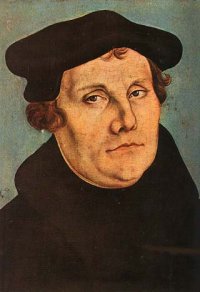
Luther Background: Martin
Luther
was a German
theologian and a major leader of the Protestant
Reformation. He is sometimes called
the father of
Protestantism. http://mb-soft.com/believe/txc/luther.htm Trial Background: http://lancefuhrer.com/ml_background.htm Luther at the
Imperial Diet of Luther, who through the church's
excommunication was
practically declared a heretic, was invited to Luther Before the
Diet http://www.specialtyinterests.net/lutherwords.html#bdiet At
length Luther stood before the council. The emperor
occupied the
throne. He was
surrounded by the most illustrious personages in the
empire. Never had
any man
appeared in the presence of a more imposing assembly
than that before
which
Martin Luther was to answer for his faith. "This
appearance was of
itself
a signal victory over the papacy. The pope had condemned
the man, and
he was
now standing before a tribunal which, by this very act,
set itself
above the
pope. The pope had laid him under an interdict, and cut
him off from
all human
society; and yet he was summoned in respectful language,
and received
before
the most august assembly in the world. The pope had
condemned him to
perpetual
silence, and he was now about to speak before thousands
of attentive
hearers drawn
together from the farthest parts of Christendom. An
immense revolution
had thus
been effected by Luther's instrumentality. Martin Luther and the
Reformation http://mars.wnec.edu/~grempel/courses/wc2/lectures/luther.html Confession of particular sins seemed
inadequate for man's
plight. The whole man needed release from total inner
corruption. Piece
by
piece and doubt by doubt, Luther came to view the
all-pervasiveness of
sin and
the only solution that could satisfy his wounded
conscience. Since man
was too
deeply sunk in sin to do anything for his own salvation,
he had to be
saved, or
justified, by faith alone. Luther's thoughts tumbled out
of the
classroom into
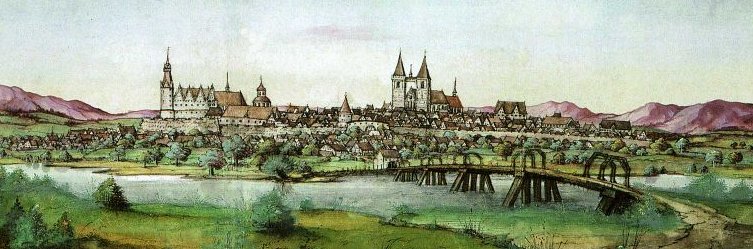
the marketplace in 1517. Luther nailed 95 propositions
(or theses) in
Latin on
the door of the castle church in Wittenburg as an open
invitation to a
debate
on their merits. They began with a popular attack on the
venality of Selected Works of
Martin Luther 1483 - 1546 http://www.iclnet.org/pub/resources/text/wittenberg/wittenberg-luther.html Briefwechsel by Martin
Luther
(1903)(primary source in German from Google books) The Martin Luther Trail in Germany (with maps) http://www.sacred-destinations.com/germany/luther-trail.htm
http://www.iclnet.org/pub/resources/text/wittenberg/wittenberg-luther.html#sw-95 Project Wittenburg: http://www.projectwittenberg.org/ Project
About Lutheranism: http://www.religionfacts.com/christianity/denominations/lutheranism.htm Lutheranism was founded by
Martin Luther, a German monk and professor who has been
called the
"Father
of the Reformation." In 1517, he famously protested
against the
Catholic
Church's sale of indulgences. In his sermons and
writings, Luther
stressed the
doctrine of justification by faith alone and the
authority of scripture
alone. http://www.sacred-destinations.com/germany/wittenberg.htm
Bibliography: http://lancefuhrer.com/ml_bibliography.htm Bainton, Roland H., "Here I Stand: The Life of
Martin
Luther,"
Meridian Publishing, Additional Atkinson, Mary. “Luther on Trial: the Proceedings Against Martin Luther from a Legal Viewpoint”, Northwestern Hillerbrand, Hans Joachim. “The Protestant Reformation”, Harper & Row, Olivier, Daniel. “The Trial of Luther” translated by John Tonkin, Mowbrays, Stella, Allyson. “Martin Luther: a Recreation of his 1521 Trial for Heresy”. Interact, Video:
The
Trial of Martin Luther Most
Evangelicals who celebrate
Reformation Day do so on October 31, which is the day
that Martin
Luther nailed
his famous 95 theses to the |