×
Check-out the new Famous Trials website at www.famous-trials.com:
|
The Trial of Bernhard Goetz: Jury Deliberations 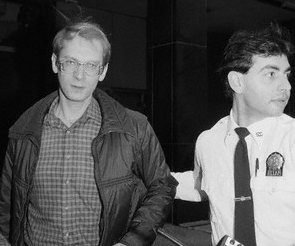 The following account is based on juror Mark Lesly's book, Subway Gunman: A Juror's Account of the Bernhard Goetz Trial (1988) and George Fletcher's account of jury deliberations in A Crime of Self-Defense: Bernhard Goetz and the Law on Trial (1988). THE JURY
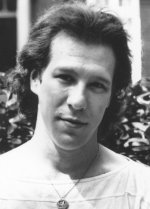 Juror Mark Lesly THE DELIBERATIONS CHARGE 1: THE DEFENDANT, ON DECEMBER 22, 1984, KNOWINGLY POSSESSED A LOADED FIREARM IN A PLACE OUTSIDE OF HIS HOME OR PLACE OF BUSINESS. MAXIMUM SENTENCE: WEAPONS POSSESSION, THIRD DEGREE, CLASS D FELONY (2.33 TO 7 YEARS) The jury, in its first vote, found Goetz
guilty on charge 1. The defense's argument that Goetz had made
prior efforts to obtain a license to carry a firearm received no
attention from the jury.
CHARGE 2:THE DEFENDANT, ON OR ABOUT DECEMBER 30, 1984, KNOWINGLY POSSESSED A FIREARM, TO WIT: A .38 CALIBER REVOLVER. MAXIMUM SENTENCE: WEAPONS POSSESSION, FOURTH DEGREE, MISDEMEANOR (6 MONTHS TO 1 YEAR) Myra Friedman, a neighbor of
Goetz, testified that Goetz gave her two guns in a hatbox for
safekeeping on December 30, the day before he turned himself in.
The jury considered that Friedman might have been lying, as she was a
writer who reported on the Goetz case for New York magazine. She
could possibly have a motive (a more compelling story) for making up a
story about Bernie giving her two guns. Others considered
Friedman "an accomplice" in this crime, and that therefore under New
York law her testimony had to be corroborated by other evidence, and
that the other corrobating evidence (testimony of men who sold the guns
to Goetz and of the police detective who received the guns from
Friedman's lawyer) was too weak. The jury requested from the
court any statements in Goetz's taped
confessions that related to his turning over the guns, but was told
that there were no such statements in the tapes. The jury also
considered whether Goetz was really in "constructive possession" of the
guns once he handed them over to Friedman. For some jurors, the
fact that Goetz did not have a key to her apartment was enough to
convince them that he did not have constructive possession. Other
jurors thought that possession was established by the fact that Goetz
had the guns before he turned them over to Friedman, and what happened
to the guns afterwards was irrelevant. The initial vote on this
charge was 8 "guilty" and 4 "not guilty," but after nearly a full day
of deliberation, the jury came around to a unanimous verdict of "not
guilty."
CHARGE 3: THE DEFENDANT, ON OR ABOUT DECEMBER 30, 1984, KNOWINGLY POSSESSED A FIREARM, TO WIT: A NINE MILLIMETER SEMIAUTOMATIC PISTOL. MAXIMUM SENTENCE: WEAPONS POSSESSION, FOURTH DEGREE, MISDEMEANOR (6 MONTHS TO 1 YEAR) See discussion for "Charge 2" above.
CHARGE 4: THE DEFENDANT ATTEMPTED TO COMMIT THE CRIME OF MURDER ON DECEMBER 22, 1984, BY INTENDING TO CAUSE THE DEATH OF TROY CANTY BY SHOOTING HIM WITH A PISTOL. MAXIMUM SENTENCE: SECOND DEGREE MURDER, CLASS B FELONY (8.33 TO 25 YEARS) The initial vote on this charge was 4
"not guilty" and 8 abstentions. The jury focused on whether the
evidence proved that Goetz had the "conscious aim or objective"
(language from Judge Crane's instructions) of killing Canty when he
pulled the trigger in the subway car. Goetz, in his taped
confessions, stated that murder was his aim when he saw the smile on
Canty's face and the shine in his eyes. This seemed to establish
the necessary intent to kill. Moreover, Goetz fired at the
youths' midsections, not at their legs as he might have if his goal was
just to injure them. Not all jurors, however, were
convinced. One argued that Goetz had "no reason" to want the
youths dead, despite his own statements to the contrary.
Some jurors suggested that his statements about wanting to kill were
the result of a post-event rage, and not the thoughts in his head as he
pulled the trigger. Eventually, most jurors decided that Goetz
had the motivation to shoot
(to end the threat), but lacked the motivation to kill. Jurors
also considered that Goetz's action, even with an intent to kill, would
be justified under the law if a reasonable person in his position would
believe that he was facing an "implied threat of deadly force."
The jurors looked at scale models of the subway car and requested
testimony regarding justification. They concluded that Canty and
Allen, and possibly Ramseur, formed a tight semi-circle around Goetz,
invaded his space, and presented some sort of threat--although
whether a reasonable person could consider it to be a threat of serious
physical injury justifying the use of deadly force was questionable.
Some jurors pointed out that Goetz need only create "a reasonable
doubt" that he met the test for self-defense, and that he had no burden
to prove that he met the standard. By the end of the day of June
13, through the process of connecting self-defense to "intent to cause
death" (and throwing in a little "reasonable doubt"), the jury
unanimously voted to find Goetz "not guilty" of this and
the other three attempted murder charges.
CHARGE 5: THE DEFENDANT ATTEMPTED TO COMMIT THE CRIME OF MURDER ON DECEMBER 22, 1984, BY INTENDING TO CAUSE THE DEATH OF BARRY ALLEN BY SHOOTING HIM WITH A PISTOL. MAXIMUM SENTENCE: SECOND DEGREE MURDER, CLASS B FELONY (8.33 TO 25 YEARS) See discussion for "Charge 4" above.
CHARGE 6: THE DEFENDANT ATTEMPTED TO COMMIT THE CRIME OF MURDER ON DECEMBER 22, 1984, BY INTENDING TO CAUSE THE DEATH OF JAMES RAMSEUR BY SHOOTING HIM WITH A PISTOL. MAXIMUM SENTENCE: SECOND DEGREE MURDER, CLASS B FELONY (8.33 TO 25 YEARS) See discussion for "Charge 4" above.
CHARGE 7: THE DEFENDANT ATTEMPTED TO COMMIT THE CRIME OF MURDER ON DECEMBER 22, 1984, BY INTENDING TO CAUSE THE DEATH OF DARRELL CABEY BY SHOOTING HIM WITH A PISTOL. MAXIMUM SENTENCE: SECOND DEGREE MURDER, CLASS B FELONY (8.33 TO 25 YEARS) See discussion for "Charge 4" above.
CHARGE 8: THE DEFENDANT COMMITTED THE CRIME OF ASSAULT IN THE FIRST DEGREE ON DECEMBER 22, 1984 BY INTENDING TO CAUSE SERIOUS PHYSICAL INJURY TO TROY CANTY BY SHOOTING HIM WITH A PISTOL. MAXIMUM SENTENCE: ASSAULT WITH A DEADLY WEAPON, CLASS C FELONY (5 TO 15 YEARS) Several jurors agreed that Goetz's
actions were unwarranted and reckless. Juror Cathy Brody argued
that the youths were most likely only planning to intimidate Goetz into
giving them money and had no intention of actually robbing him.
She thought Goetz used excessive force for the level of threat the
youths presented. Two other female jurors generally agreed with
Brody and, after a lengthy discussion with no opinions changing, a
deadlock on the assault charges seemed a real possibility. A
deadlock was averted, however, when juror James Mosely (a graphic
artist by occupation), cut out five figures and began moving them
around a plastic overlay covering a diagram of the subway car.
Figures labeled "Unreasonable Number One," "Unreasonable Number Two,"
and "Unreasonable Number Three" begin closing in on round-headed and
comical-looking "William Reasonable." The three hold-out jurors,
appreciating the humorous slideshow-like presentation, came to see more
clearly that anyone--not just the quirky and unreasonable Bernhard
Goetz--would have been afraid on that subway car. At least with
respect to the shooting of Canty, Allen, and Ramseur, all jurors could
agree on a verdict of "not guilty" on the assault charge.
CHARGE 9: THE DEFENDANT COMMITTED THE CRIME OF ASSAULT IN THE FIRST DEGREE ON DECEMBER 22, 1984 BY INTENDING TO CAUSE SERIOUS PHYSICAL INJURY TO BARRY ALLEN BY SHOOTING HIM WITH A PISTOL. MAXIMUM SENTENCE: ASSAULT WITH A DEADLY WEAPON, CLASS C FELONY (5 TO 15 YEARS) See discussion for "Charge 8" above.
CHARGE 10: THE DEFENDANT COMMITTED THE CRIME OF ASSAULT IN THE FIRST DEGREE ON DECEMBER 22, 1984 BY INTENDING TO CAUSE SERIOUS PHYSICAL INJURY TO JAMES RAMSEUR BY SHOOTING HIM WITH A PISTOL. MAXIMUM SENTENCE: ASSAULT WITH A DEADLY WEAPON, CLASS C FELONY (5 TO 15 YEARS) See discussion for "Charge 8" above.
CHARGE 11: THE DEFENDANT COMMITTED THE CRIME OF ASSAULT IN THE FIRST DEGREE ON DECEMBER 22, 1984 BY INTENDING TO CAUSE SERIOUS PHYSICAL INJURY TO DARRELL CABEY BY SHOOTING HIM WITH A PISTOL. MAXIMUM SENTENCE: ASSAULT WITH A DEADLY WEAPON, CLASS C FELONY (5 TO 15 YEARS) Charge
11, concerning the fourth and fifth shots fired by Goetz, including the
bullet that paralyzed Darrell Cabey, presented the greatest challenge
for the jury. According to juror Mark Lesly, at
least one-fifth of the jury's total time spent on deliberations
concerned charge 11. The jury had to decide whether Goetz had
time to
conclude that whatever threat the youths presented had effectively
ended by the time he went over to Cabey and, according to his own
confession, said, "You seem to be doing all right; here's another,"
before firing his final shot. Goetz's account contradicted
several
other witnesses who described the shots as coming in rapid
succession.
The "rapid succession" theory allowed jurors to accept the defense
argument that Goetz effectively went on "automatic pilot" after he
fired the first shot; the five shots were all really one event.
Jurors
speculated that Goetz might not in fact have said "here's another," but
just had that thought in his mind, and possibly only after the
shooting. One witness, however, presented problems for the
defense:
Christopher Boucher. Boucher testified that Goetz did pause
between
his fourth and fifth shot, and went over to Cabey and fired the last
shot point blank into Cabey's side as he sat in a subway seat.
The
fact that the evidence concerning the location of Cabey's entry wound
was inconsistent with Boucher's testimony allowed some jurors to
speculate that Boucher made his whole story up, though for what
possible reason the jurors had a hard time determining. In the
end,
the concept of reasonable doubt again turned the jury toward a not
guilty vote. The defense, the jury believed, raised at least the
possibility that Goetz went on "automatic pilot" in response to the
threat presented in the subway car.
CHARGE 12: THE DEFENDANT COMMITTED THE CRIME OF CRIMINAL POSSESSION OF A WEAPON IN THE SECOND DEGREE ON DECEMBER 22, 1984 BY POSSESSING A LOADED FIREARM WITH THE INTENT TO USE IT UNLAWFULLY AGAINST ANOTHER MAXIMUM SENTENCE: SECOND DEGREE CRIMINAL POSSESSION, CLASS C FELONY (5 TO 15 YEARS) The jury concluded that Goetz did not
enter the subway with the "conscious aim or objective" of using his
firearm to injure another. In other words, they did not think
Goetz was "looking for trouble" on December 22, 1984. Believing
that Goetz therefore lacked the necessary unlawful intent to use his
firearm, the jury, in its initial vote on this charge, unanimously
voted "not guilty."
CHARGE 13: THE DEFENDANT COMMITTED THE CRIME OF RECKLESS ENDANGERMENT IN THE FIRST DEGREE ON DECEMBER 22, 1984 BY RECKLESSLY CREATING A GRAVE RISK OF DEATH TO ANOTHER PERSON BY DISCHARGING A LOADED FIREARM ON AN OCCUPIED SUBWAY CAR. MAXIMUM SENTENCE: FIRST DEGREE RECKLESS ENDANGERMENT, CLASS D FELONY (2.33 TO 7 YEARS) The jury concluded that Goetz's
discharge of his weapon on the subway was not sufficiently "reckless"
because he had a not unjustified fear that his shooting victims were
about to cause him serious physical harm. The jury therefore, on
its initial vote on this charge, unanimously voted "not guilty."
BERNHARD GOETZ TRIAL HOMEPAGE |