×
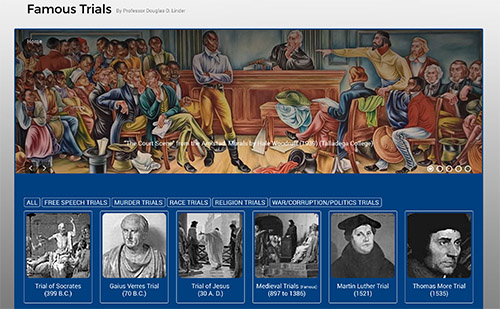
Check-out the new Famous Trials website at www.famous-trials.com:
|
December 5, 1984 ROBERT
OLIVER JORDAN, a witness called by the plaintiff, having been first
duly sworn,
testified as follows: DIRECT
EXAMINATION BY MR.
GRUTMAN: Q. Mr.
Jordan, would you please state for the
record, and speaking in as loud and as clear a voice as you possibly
can so
that every juror hears you, what is your full name? A. Robert
Oliver Jordan. Q. And
where do you live, Mr. Jordan? A. At
205 East 78th Street, New York City. Q. What
is your occupation? A. I'm
in the advertising business. Q. And
for what length of time have you been in
the advertising business field? A. Twenty-eight
(28) years. Q. At
the present time with what agency, office
or organization are you affiliated in this field? A. I'm
with an agency known as Sachi and Sachi
Compton, Incorporated. Q. And
what is your position with that company
officially? A. I'm chairman of the board of that company. * * * Q. Among
the clients serviced by the Compton
Agency in 1983, are you familiar with whether or not the agency had
anything to
do with a company that produced a product called Campari? A. Yes,
we were the agency for a company called
Campari USA. Q. For
what length of time, prior to the fall of
1983, has the Compton agency been acting as the agents for that
particular
product? A. We
started with them in early 1981, March, I
believe. Q. Would
you tell us what you know or knew then
about the nature of that product? A. Certainly,
it's a distilled spirit, widely
popular in Europe, which is consumed as a mixed drink. * * * Q. The
first of these is called "Geraldine
Chapman Talks About Her First Time", and that appears on the back cover
of New York magazine. The second
is
called "Tony Roberts Talks About His First Time", which appears on
the back cover of the New Yorker magazine.
The third of these is called "Elizabeth
Ashley Talks About Her First Time". And
the last of these exhibits is entitled "Jill St. John
Talks
About Her First Time". Could you
tell me, if you will, Mr. Jordan, what some of the other magazines were
in
which these ads appeared? A. Certainly,
I could. It was a lengthy list, but just
for example, Life
magazine, Cosmopolitan, Playboy, People, Newsweek, Money
magazine, the New
Yorker, Vogue, Tennis Magazine, and a number of others. * * * Q. Could
you, on the basis of work done at your
agency, give us some idea of approximately what the total audience or
readership was that saw these ads in the various magazines in which
they were
inserted? A. Well,
I don't know the exact figure, but I would
estimate roughly, over the cumulative length of that campaign, which
something
about like three (3) years, it had to be in excess of ten million
(10,000,000)
people. * * * Q. Let
me just take, for example, the first of
them, Exhibit 8, and read the text to you. Do you
need to have a copy of this before you? A. I
doubt it, sir. Q. All
right, taking for example, the text of
Exhibit 8A, showing the picture of Geraldine Chaplin -- excuse me, I'll
withdraw that. Let me use the Jill St.
John one. The text reads: "St.
John: My first time was in the Tre Scalini, that adorable sidewalk cafe
in
Rome. Interviewer: Oh, really? Right out in the open? St.
John: Sure. You see, I'm basically an
outdoorsytype person. Interviewer:
I see. You must tell me all about it. "St.
John: Well, we were just relaxing after a hard day shooting, just me
and the
crew. It happened with the stunt man. Interviewer:
That stunt man? That sounds a bit risky. St.
John: Oh, it wasn't really. You see, he
was Italian and they just seem to know about these things. Interviewer:
Go on. St.
John: He was very romantic. He leaned
close and gently, 'Well,' I said, 'I've never been shy about anything
before.'
He gave me a charming grin, then ordered a Gingerly for me, that's
Campari and
ginger-ale and soda, and a Campari and soda for himself. Interviewer:
A little mix of Italian and American. How
interesting. How was it? St.
John: Very satisfying, after that long, hot day. See,
it was deliciously light and so
refreshing, a very special experience. Interviewer:
Did you ever have it again? St.
John: Of course, many times. It's not
the kind of thing you try once and then you forget about it. I've gone out with some outstanding men and
they all know one or two new ways to enjoy it. I
prefer the Exotic, that's Campari with grapefruit juice.
Interviewer:
Well, you seem to have come a long way since your first time. "St.
John: What can I say. It's hard to
resist something when it just keeps getting better and better." Now,
were you familiar with the preparation of the text of that ad? A. In
general terms, sir, yes. Q. What
was the general objective in the
preparation of this interview format for these kinds of ads? A. All
right, let me start with the objective of
the advertisement now. First of all,
Campari was a very popular product, really, throughout western Europe. It really was not much of a factor in the
beverage business in the United States and had not been tried by very
many
people. It has a rather unique bitter
flavor, and as a consequence it is something of an acquired taste. In other words, if you try it, the first time
you may be somewhat ambivalent about it. But,
perhaps, the second time you drink it you get to like
it a little
more. Perhaps some of the same way
people feel about olives -- some of them do. The
objective of the copy, therefore, was to really make the point, if you
try
this, you may feel a little ambivalent about it, but you'll kinda get
to like
it. And if you take it a
second time, you may get to enjoy it even
more. Q. Was
there a sort of double meaning in the
text as it was written? A. Yes,
there was. And that was essentially a kind
of humorous,
tongue-in-cheek, attention sort of device. That's
right. Q. And
the tongue-in-cheek, attention getting
device, while ostensibly about the liqeur had as its double meaning
what? A. Well,
frankly, first sexual experience. Q. Was
it the intention of the advertising
agency in preparing these to do so tastefully? A. Yes,
it was. Q. I
notice on the ad, and I'll show you Exhibit
1 (sic), that there appears -- the Jill St. John one again -- THE
COURT: It that 8A? Q. There
is a little c in a circle, which says,
"1983, Imported by Campari USA, New York, New York, 48 Proof, Spirit
Aperitif Liqeur." And then, on the bottom there is a little r in a
circle. Are
you familiar with those legends? A. Yes,
I am. Q. What
does the c with the circle indicate? A. Well,
the c is a copywrite registration. Q. And
the r? A. And
the r is the registration of the trade
mark. Q. Okay. And approximately how much money was spent by
your client,
the Campari
company, in producing and disseminating these
ads to the millions of people who saw it in various places? A. Just
about three million dollars
($3,000,000.00) over the three (3) years that we advertised it. Q. Earlier
in this trial, Mr. Jordan, there was
introduced into evidence as Plaintiff's Exhibit #1, part of Plaintiff's
Exhibit
#1, an ad which appeared in the November, 1983 and in the March, 1984
issues of Hustler magazine called, "Jerry Falwell Talks About
His
First
Time". You notice that publication,
comparing it with Plaintiff's Exhibit's #8A, 8B, 8C, and 8D, do you
notice any
apparent similarities between the Falwell ad and the other ads which
are agency
prepared? A. Well,
I do now and I did when it was first
brought to my notice. Q. Mr.
Jordan, would you tell us, did you on
behalf of Campari itself either seek for, solicit of obtain the consent
of
Reverend Falwell for the ad shown in this exhibit from Hustler magazine? A. No,
sir, we had absolutely nothing to do with
the preparation of that ad. Q. Was
your permission or consent sought or
given with regard to the use of the Campari bottle, the orange drink
and the
other drink in the smaller bottle, together with the tongs and ice cube
which appear in the Falwell ad? A. It
was absolutely not sought. Q. And
I call your attention to the Jill St.
John ad and I ask you to compare the graphic art work of the depiction
of the
bottle, the two glasses, the drinks, the tongs and the ice cube which
is shown
in the authorized ad of Jill St. John prepared by Campari and the
graphic
material which appears in the Falwell ad: A Campari bottle, two drinks,
tongs
and a glass -- and an ice cube rather. Do
they appear to be the same? A. They
appear to be identical. Q. Looking
at the Falwell ad with the Campari
trade mark and copywrite material, to your knowledge, Mr. Jordan, was
that
pirated by Hustler? A. It
appears to me to be identical and
therefore was pirated. * * * Q. Did
you and your client discuss that ad? A. Yes,
we did. Q. And
subsequent to the conversation which your
client had with you about the ad, did you do something? A. Yes,
I did. * * * Q. After
this conversation, Mr. Jordan, did you
on behalf of Campari write a letter to the publishers of Hustler
magazine? A. Yes,
I did. * * * Mr.
Jordan, after you wrote this letter expressing your shock and dismay and belief in the damage that had
been caused, did you receive any response from Larry and Althea Flynt,
publishers of Hustler, or anybody on their behalf? A. No,
I did not. |