|
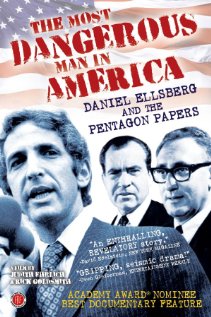
The Most
Dangerous Man in America:
Daniel Ellsberg and the Pentagon Papers
(2009)
Directed by Judith Ehrlich and Rick Goldsmith
Written by Lawrence Lerew, Rick Goldsmith,
Judith Ehrlich, and Michael
Chandler
92 Minutes - Documentary
|
Images
Movie
Trailer
Cast
John
Dean
|
Himself
-
Whote House Counsel to President Nixon
|
Daniel
Ellsberg
|
Himself
|
Patricia
Ellsberg
|
Herself
|
Richard
Falk
|
Himself
- Professor of International Law
|
Max
Frankel
|
Himself
- Washington Bureau Chief, New York Times
|
Mike
Gravel
|
Himself
- Senator (D - Alaska)
|
Morton
(Mort) Halperin
|
Himself
- Supervisor, Vietnam War Study
|
Egil
"Bud" Krogh
|
Himself
- Director, 'Plumbers' Unit - Nixon White House
|
Thomas
"Tom" Oliphant
|
Himself
- Reporter, Boston Globe
|
Tony
Russo
|
Himself
- RAND Analyst
|
Thomas
Schelling
|
Himself
- RAND Analyst / Nobel Laureate
|
Hendrick
Smith
|
Himself
- Reporter, New York Times
|
Janaki
Tschannerl
|
Herself
- Peace Activist
|
Howard
Zinn
|
Himself
- Historian
|
Reviews
| Roger
Ebert:***
I
thought
I was pretty much familiar with the story
about how the Pentagon Papers
were leaked to the press in 1971. I knew that
Daniel Ellsberg, a
high-level analyst at the Pentagon and the
RAND Corp., had Xeroxed the
Pentagon's secret history of the Vietnam War
and leaked it to the
press, notably the New York Times.
What I
never realized was what a high-ranking
employee really Ellsberg was and
how secret the Pentagon Papers really were.
"The Most Dangerous Man in
America: Daniel Ellsberg and the Pentagon
Papers," a documentary by
Judith Ehrlich and Rick Goldsmith, explains
all this. Locked in safes,
the papers' existence was a secret even from
President Lyndon B.
Johnson, who, it was believed, would have been
infuriated by such a
history. Ellsberg didn't merely leak the
papers, he played a key role
in contributing to them.
Ellsberg,
in
short, could not be dismissed as merely a
sneak and a snitch, but a
man who had direct knowledge of how the
American public had been
misled. He saw himself not as a peacenik war
protester, but as a
government servant exercising a higher moral
duty. "The Most Dangerous
Man in America" traces Ellsberg's doubts about
authority back to a
childhood tragedy and forward to the influence
of young men who went to
prison for their convictions.
It
is a
skillful, well-made film, although, since
Ellsberg is the narrator, it
doesn't probe him very deeply. We see his
version of himself. A great
deal of relevant footage has been assembled
and is intercut with stage
re-creations, animations and the White House
tapes of Richard Nixon,
who fully advocated the nuclear bombing of
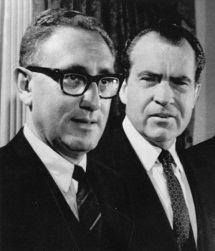
Hanoi. Kissinger was
apparently a voice of restraint.
|
Mark
Jenkins, NPR
Forever
defined by a single
action, Daniel Ellsberg is known as the
man who blew the whistle on the
Vietnam War. But neither Ellsberg's choice
nor its execution was
simple, as Judith Ehrlich and Rick
Goldsmith's Oscar-nominated
documentary reveals.
Narrated by
Ellsberg himself, the movie follows its
protagonist's disillusionment
as it blossoms into the decision to copy
the 7,000-page secret report
on the war's conduct. (His teenage kids
helped.) Then the focus
switches to The New York Times,
The Washington Post
and the Boston Globe — and the
lawyer who won a landmark
Supreme Court ruling against prior
restraint of news reports.
It's a
dubious charge. The Pentagon Papers
contained a history of the Vietnam
War that revealed how presidents all the
way back to Truman had
deceived the American people; they didn't
include current military
information that might have helped the
Viet Cong and the North
Vietnamese.
Ehrlich and
Goldsmith found plenty of interesting
archival images, especially for
the lesser-known first half of the story.
But they sometimes rely on
Errol Morris-style reconstructions of
events, which are less deft than
Morris'. Distractingly, they also use
sketchy animation for a few
sequences.
. . .The Most Dangerous Man in
America lives up to its subject's
importance. It's not only a fine
introduction for viewers who don't
remember the Vietnam era, but also
offers some revelations to those who
thought they knew it reasonably
well.
Ann
Hornaday, The Washington Post
As "The
Most Dangerous Man in America" opens,
Ellsberg describes how, in the
fall of 1969, he photocopied 7,000
pages of a classified history of
U.S. involvement in Vietnam and
ultimately made it public in the New
York Times, The Washington Post and
other outlets.
Narrated by
Ellsberg and told through a carefully
layered collage of archival
footage, reenactments, animation and
present-day interviews with
eyewitnesses, "The Most Dangerous Man
in America" grabs viewers with
intrigue and high-stakes derring-do
and never lets go. After a
combination breakdown-breakthrough,
when he decides to risk his career
and blow the whistle, Ellsberg is
hounded by Richard Nixon's
administration and the FBI, indicted
on charges that could mean life in
jail and finally targeted in a plot
that would come to light during the
Watergate investigation.
Most
amazingly, "The Most Dangerous Man in
America" succeeds not just as a
documentary, but also as an example of
genres that most fiction films
struggle to get right . . .
This
page was prepared by Kaitlin Woody
|
|