×
Check-out the new Famous Trials website at www.famous-trials.com:
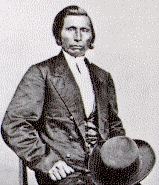 Other Day, one of the few Indians under whose red skin beat a human
and thankful heart, knew that the uprising was not caused by the southern
rebels. Other Day has established for his name and honorable place
in the history of Minnesota, because the bearer of that name, in grateful
remembrance of the ever open hand of the white man in times of need, had
continuously advised his tribesman against going on the warpath against
the pale face. When he was later asked whether any representative
of the southern rebel government had, at that time, appeared among the
Indians and had incited them by means of deceptive pretense to make war
against the white man, Other Day declared that this was not the case.
If this were still insisted upon, he would have to declare it to be an
infamous lie. This brace Indian had attended all the secret meetings
of his tribesmen, in which he always arose as a friend of his white brothers
and advised peace. Again in the meeting held the day before the outbreak,
he protested against all violence. Other Day, and we cannot mention
the name of this brave man often enough, when he was convinced that the
bloodthirsty desires of his dehumanized tribesman could not be stilled
by words of reconciliation left his coat and hat behind as he took flight
from this last and decisive council of the Redskins. Besides, at
this meeting, Little Crow had repeatedly declared him to be a traitor of
his tribe and hence, an outlaw.
Other Day, one of the few Indians under whose red skin beat a human
and thankful heart, knew that the uprising was not caused by the southern
rebels. Other Day has established for his name and honorable place
in the history of Minnesota, because the bearer of that name, in grateful
remembrance of the ever open hand of the white man in times of need, had
continuously advised his tribesman against going on the warpath against
the pale face. When he was later asked whether any representative
of the southern rebel government had, at that time, appeared among the
Indians and had incited them by means of deceptive pretense to make war
against the white man, Other Day declared that this was not the case.
If this were still insisted upon, he would have to declare it to be an
infamous lie. This brace Indian had attended all the secret meetings
of his tribesmen, in which he always arose as a friend of his white brothers
and advised peace. Again in the meeting held the day before the outbreak,
he protested against all violence. Other Day, and we cannot mention
the name of this brave man often enough, when he was convinced that the
bloodthirsty desires of his dehumanized tribesman could not be stilled
by words of reconciliation left his coat and hat behind as he took flight
from this last and decisive council of the Redskins. Besides, at
this meeting, Little Crow had repeatedly declared him to be a traitor of
his tribe and hence, an outlaw.
The brave man, knowing full well that the lives of many whites depended upon him, now hurried as rapidly as he could to the Upper Agency, which was most distantly located from all places of refuge. He saved the lives of sixty men, women and children, by taking them along remote paths through the prairie to a place of safety. Honor be to his memory! [Jacob Nix, The Sioux Uprsing in Minnesota: Jacob Nix's Eyewitness History]
[2]
ON MONDAY, the 18th, about 8 o'clock A.M., word came to the upper Agency at Yellow Medicine, that all the white people at the Lower or Red Wood Agency, had been murdered by the M'dewakanton Sioux. Then the Indians, at the call of their chiefs, assembled in council to the number of about 100 -- Sissetons and Wakpetons, and about 30 young Yanktons who were present, but being without a chief had no voice in the council. At 12 M., while they were debating what course to take, word came that a party of soldiers had arrived at the Red Wood Agency, and were all killed. This news still further agitated the council, which was greatly divided in sentiment . . . .
Other-Day himself addressed them. He told them that they might easily enough kill a few whites -- five, ten, or a hundred. But the consequence would be that their whole country would be filled with soldiers of the United States, and all of them killed or driven away. "Some of you," he said, "say you have horses an may escape to the plains; but what will become of those who have no horses." They replied to this that all would happen anyway.
After a long debate, towards evening the Yanktons, Sissitons, and a few of the Wakpetons, rising from the council, without coming to any conclusion, moved towards the houses of the whites, for the purpose of killing them.
In the meantime he (Other-Day)
took his wife by the arm, took his gun and went to the houses of the whites,
informed them of their danger (for they had preciously known nothing of
the council) and hurried them all to the Agency house, a brick building
about a mile from the place where the council was held. They assembled
here armed, to the number of over fifty, resolved to defend themselves
and families to the last extremity. Then he got four of his relatives
to assist him in guarding the building from assault during Monday night.
[From the Saint Paul Press, August 28,
1862]