|
The
Court has developed a number of theories upon
which state action sufficient to trigger the
protections of the Constitution might be
found. The "public function theory," applied
by the Court in the case of the park for whites
only involved in Evans v Newton, holds
that when certain traditional functions of
government are turned over to private parties, the
Constitution (in the case of Evans, the Equal
Protection Clause) will apply. The "judicial
enforcement theory" holds that judicial
enforcement of private discrimination may
constitute state action. Such state action
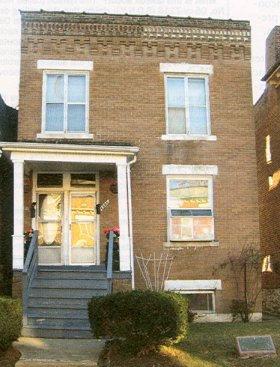
was found to exist in the case of Shelley v
Kraemer, where the state courts of Missouri
had been used to evict a black family from a home
they had bought from a white in violation of the a
restrictive covenant entered into by white
homeowners. Since almost all private
discrimination is supported at some level through
the courts (through application of race-neutral
trespass and contract law, for example), Shelley
leaves us to guess just what the exact limits of
its governing principle might be. A third
basis for finding state action is that the action
of the government is so entwined with the action
of the private parties that the complained about
action can be fairly attributed to the
government. This was found to be the case in
Burton v Wilmington, where the Eagle Coffee
Shoppe--which served only white customers--had
leased its space in a building owned by the City
of Wilmington. The Court found that the
presence of a "symbiotic relationship" between the
city and the private discriminators supported its
conclusion. On the other hand, a liquor
license issued by the city of Harrisburg,
Pennsylvania to a Moose Lodge that served only
whites was found insufficient to bring the Equal
Protection Clause into play (Moose Lodge v
Irvis).
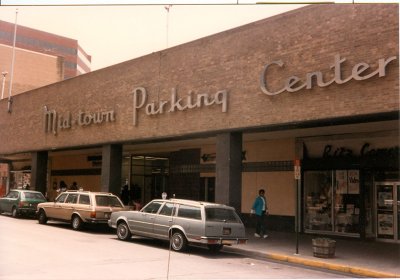 The Eagle Coffee Shoppe, which served only whites, was located in this Parking Center owned by the city of Wilmington. The most recent of our cases, Edmonson
v Leesville Concrete, represents a
surprisingly lenient application of the state
action requirement. In Edmonson,
the Court found that a private defense
attorney's use of peremptory challenges to
exclude black jurors in a civil case constituted
state action. The Court found that the use
of peremptory challenges was authorized by
federal law and that there was judicial
assistance of the discrimination in the excusing
of the challenged juror. The Court also
described the selection of jurors as a
traditional state
function.
|
Shelley v. Kraemer (1948)
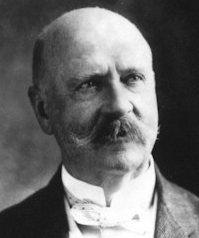 Senator Augustus Octavius Bacon, 1839-1914: creator of Baconsfield Park for the white people of Macon (Evans v Newton.) WHATEVER HAPPENED TO BACONSFIELD PARK? 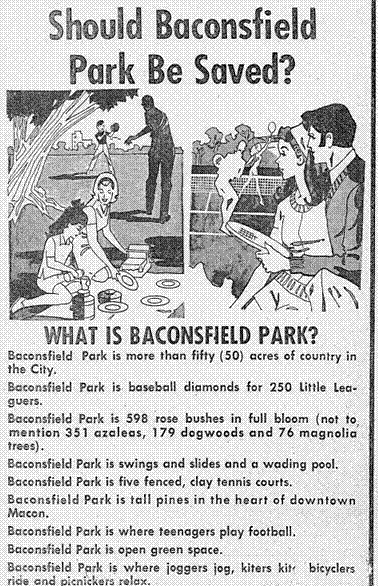 Questions 2. Should the willingness of the Court to find state action depend upon the constitutional right that is alleged to have been violated? Should the Court, for example, be more willing to find state action when the claim is one of racial discrimination than when it is one of a denial of procedural due process? Should a private company granted a utility monopoly be able to cut off electricity to deadbeat customers without affording them an opportunity to be heard, but unable to offer electrical service to only, say, white customers? 3. What do you think Shelley means? Does the Court reach the result it did only because the Missouri courts had stepped in to frustrate a contract between a willing buyer and a willing seller? 4. Does Shelley mean that racially restrictive covenants are completely ineffective? 5. What if Harrisburg had only one liquor license to give, and it gave it to the Moose Lodge? Would that constitute state action? 6. What are the policy arguments for applying constitutional limitations only to governmental racial discrimination, not private racial discrimination? If racial discrimination is bad, why not interpret the Constitution to ban all forms of it? Do you agree that the Imperial Wizard of the KKK should be able to apply racially discriminatory criteria in choosing a marriage partner? In what guests he lets into his house? In what persons he lets into his store? 7. Does the surprisingly lenient application of the state action requirement in Edmonson come from the Court's strong distaste for racial discrimination in any form? 8. Do you agree or disagree with the suggestion of Justice O'Connor in her Edmonson dissent that the use of peremptory challenges should be viewed as "an enclave of private action in a government-managed proceeding"? |