The
Cases
Brandenburg v. Ohio (1969)
Hess
v. Indiana (1973)
Rice
v. Paladin Press (1997)
Introduction
The first
judicial suggestion that First Amendment protection
should extend to subversive speech that falls short
of inciting unlawful conduct can be traced to
Learned Hand and his opinion in the 1917 case of Masses
Publishing v Patten. Hand's decision was--at
the time--a rare victory for the First Amendment. In
upholding the argument of Masses Publishing that the
postmaster general's refusal to allow the mailing of
its "revolutionary journal" attacking capitalism and
the draft violated the First Amendment, Hand said
that the government may prosecute words that are
"triggers to action" but not words that are "keys of
persuasion."
The
incitement test first urged by Learned Hand did
not become part of the Supreme Court's First
Amendment jurisprudence until 1969, in the per
curium decision of Brandenburg v Ohio.
In reversing the conviction of a Ku Klux Klan
leader who gave a speech warning "that there might
have to be some revengeance taken" for "continued
suppression of the white, Caucasian race," the
Court held that the First Amendment allows
punishment only of subversive advocacy calculated
to produce "imminent lawless action" and which is
likely to produce such action. Thus, Brandenburg
brings together the incitement test urged by Hand
and the "clear and present danger" test urged by
Justices Holmes and Brandeis in their famous
dissents in the 20s. The Court applied its
Brandenburg analysis four years later in Hess
v Indiana to reverse the conviction of a
demonstrator who was overheard by a police officer
to say, "We'll take the fucking street
later." The Court concluded that Hess's
statement, taken in context, was not aimed at
producing imminent lawless conduct but
rather, at the most, lawless conduct at some
indefinite future time.
The
Court also failed to find the Brandenburg
test satisfied in NAACP v Clairborne Hardware
(1982). The Court found First Amendment
protection for the NAACP's practice of writing
down names of blacks who violated a boycott of
certain white businesses, and then reading them
aloud at NAACP meetings. The Court also
found constitutional protection for the statement,
"If we catch any of you going in any of them
racist stores, we're going to break your damn
neck." The Court said the statement fell
short of a direct threat or ratification of
violence.
Rice
v Paladin Enterprises considered
the First Amendment arguments of a publisher of a
how-to guide for hit men. Paladin's book, Hit
Man: A Technical Manual for Independent
Contractors, was concededly used by a reader
as a guide for committing the brutal contract
killing of three persons. A panel of the
Fourth Circuit Court of Appeals ruled unanimously
in Rice that Brandenburg did not
bar a jury from imposing civil liability on
Paladin for aiding and abetting murder. The Fourth
Circuit read Brandenburg not to require
imminence for the type of speech involved in Rice.
In 1998, the Supreme Court denied cert in Rice.
|
The Incitement Test (Brandenburg)
"The constitutional guarantees of free speech
and free press do not permit a State to forbid
or proscribe advocacy of the use of force or of
law violation except where such advocacy is
directed to inciting or producing imminent
lawless action and is likely to incite or
produce such action." |
Controversial Websites Present Thorny First
Amendment Issues
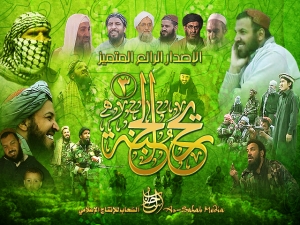
Snapshot of
http://international.thabaat.net/,
a pro-Al qaeda website, as it appeared in
June 2009
1. A website called "The Nuremberg
Files," a virulently anti-abortion website,
featured such images as simulated blood
dropping from fetuses. It also
provided the names and addresses of doctors
in the United States who performed
abortions. Red lines crossed the names
of a few doctors who had been killed by
militant anti-abortionists and gray lined
crossed the names of wounded doctors.
It is a federal crime to intimidate persons
who provide reproductive health
services. Can the website operator be
prosecuted under federal law? Sued
civilly by a doctor wounded by a website
visitor? (In 2002, the 9th Circuit, voting 6
to 5, held the speech on the Nuremberg Files
was not protected. (Planned Parenthood v American
Coalition of Life Activists).
2. The "Society for Advancement of
Man-Boy Love" attracted attention after two
men who kidnapped and sexually molested an
11-year-old boy were found to have kept a
diary that indicated they turned to the
"Man-Boy Love" website for psychological
comfort. The site posted
pseudo-studies that purported to show that
unforced sex between an adult and child can
be a "positive" experience: "Man/boy love,
far from dangerous to minors, can be quite
healthy." The site suggested that the
"loving pedophile can provide companionship
and security for a child and should be
viewed by parents as a partner in the boy's
upbringing, someone to be welcomed into the
home." Is this protected speech, given
that the activity being described is illegal
in all fifty states? In Los Angeles, a
pedophile was found to have turned to a
website that listed good places to "observe
children." Protected speech?
|
|
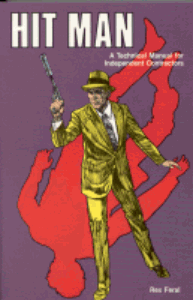
Cover of Hit Man: A Technical
Manual for Independent Contractors,
the book at issue in Rice v.
Paladin Press
Wikipedia entry on
the "Hit Man" controversy
Questions
1.
Would the KKK speaker in Brandenburg be
protected by the First Amendment if he had said "NOW
is the time to take revengeance" instead of "It's
possible that revengeance may have to be taken"?
2. What
if the KKK speaker had said "If the Supreme Court
decides case XYZ against us, then we must assassinate
all the justices that voted the wrong way"?
3. How
should the "Mark Antony"-type speech be handled? (As
you may know, Antony gave a famous speech arousing
Romans to kill Brutus for his participation in the
assassination of Caesar, but did so without ever
literally suggesting that they commit murder--the
suggestion was all between the lines.)
4. To
be the basis of a permissible prosecution under the
First Amendment is it only necessary that there be an
incitement to imminent lawless action, regardless of
how minor may be the infraction involved? Can,
for example, a demonstrator be prosecuted for
urging people to "Go trespass" or "Jaywalk
now!"?
5. What
does it say to you that members of the established
press would lend their support to Paladin Press's
First Amendment argument? Was this a triumph of
ideology over common sense?
6. The
full text of Hit Man is now posted on a
website, accessible even by minors. Assuming
that a murder could be traced to a person who
downloaded information from the Hit Man website,
could a civil suit or even a criminal prosecution be
brought against the website author?
Supreme Court Strikes Down Ban on
Animal Slasher Videos
In 2010, the
Supreme Court decided the case of United
States v. Stevens, raising the
following question:
Is a federal statute that
criminalizes the creation, sale, or
possession of the depiction of animal
cruelty with the intention of placing that
depiction in interstate or foreign
commerce for commercial gain, with an
exception for a depiction that has serious
religious, political, scientific,
educational, journalistic, historical, or
artistic value, 18 U.S.C. § 48,
unconstitutional in infringing free speech
rights guaranteed by the First Amendment?
The government argued that the law only
prohibited depictions of activity that is
illegal. The Court, however, voting 8
to 1 (Justice Alito dissenting), found the
law unconstitutionally overbroad, suggesting
that, as written, the law could be enforced
against protected speech such as hunting
videos.
|
The First Amendment
and Aid to Terrorist Organizations
Holder
v. Humanitarian Law Project
(U.S. 2010)

In response to the terrorist
bombings of the World Trade Center and the
Pentagon on September 11, 2001, Congress
passes a law which outlawed "knowingly
providing material support or resources to a
foreign terrorist organization."
"Material support or resources" was defined to
mean any tangible or intangible service,
training, expert advice, financial services,
communications equipment, personnel,
transportation, financial
services--essentially any kind of help except
for providing medicine or religious materials.
The Humanitarian Law Project (HLP) wished to
assist "the Kurdistan Worker's Party" and the
"Liberation Tigers of Tamil" (both
organizations are included on the U.S.
government's list of "foreign terrorist
organizations"). Although both
organizations were found by the government to
have engaged in terrorist attacks, they also
engaged in legitimate political activities and
in humanitarian activities. The HLP
hoped to train the Kurdistan Worker's Party in
methods of dispute resolution and in
petitioning the United Nations. The HLP
also expressed a desire to engage in political
activity on behalf of the Tamil Tigers.
The HLP challenged the federal statute,
arguing that the support it planned to provide
the two organizations was protected by the
First Amendment.
The Supreme Court, on a 6 to 3 vote (with the
five conservatives and Justice Stevens in the
majority), rejected HLP's challenge to the
law. The Court found that the law was
not unconstitutionally vague, and did not
violate HLP's right of free speech or of
expressive association. The Court did
allow for the possibility that government
enforcement of the law against some forms of
political advocacy on behalf of a listed
terrorist organization might be
unconstitutional as applied--but that could
only be decided in a case with more developed
facts.
|
|
