|
Buckley considered the constitutionality of a federal campaign financing law that imposed numerous restrictions on both candidate's own spending and the contributions of individuals to campaigns. The challenge to the act was brought by unlikely political bedfellows, including conservative Senator James Buckley and liberal anti-war candidate Eugene McCarthy. The
Court in Buckley upheld some of the
provisions of the act, while striking down
others. In particular, the Court invalidated
limits placed on the personal expenditures of
candidates for federal office, thus paving the way
for runs by wealthy candidates such as Ross Perot
in 1992. The Court also struck down a $1000
limit on individual spending on behalf of a
campaign, concluding that the restriction
was not closely tailored to serving the
government's asserted interest in preventing
corruption. On the other hand, the Court upheld
limits on individual contributions to
campaigns and the use of federal matching funds
for candidates who agree to abide by federal
spending limits. The Court also upheld donor
disclosure requirements, except as they apply to
controversial third parties where disclosure might
prove embarrassing to donors. Citizens
Against Rent Control (1981) considered
the legality of a Berkeley, California ordinance
limiting contributions to campaigns to support or
oppose ballot measures to $250. The Court
invalidated the limitation, concluding that the
concern in Buckley about "buying influence" had
little applicability in the case of ballot
measures. In reaching its conclusion, the
Court seemed either to be applying strict
scrutiny--or something very close to it. In
2007, the Court signalled a new willingness to
strike down campaign finance regulations. In
Federal Election
Commission v Wisconsin Right to Life, the
Court voted 5 to 4 to invalidate a key section of
the McCain-Feingold Act that banned corporations
and unions from buying broadcast ads that mention
the names of candidates for federal office in the
weeks immediately before an election.
In
2010, the Supreme Court considered whether the
First Amendment allowed the government to impose
limits on direct funding of political attacks by a
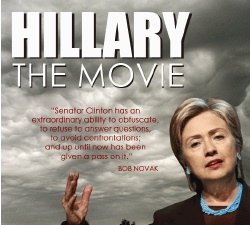
corporation. Citizens United v Federal Election
Commission involved a challenge to a
corporately-funded documentary attacking the
candidacy of Hillary Clinton. Voting 5 to 4,
the Court ruled that the First Amendment
prohibited the government from banning political
spending by corportations (and, presumably, labor
unions) in candidate elections. Writing for
the Court, Justice Kennedy wrote “If the First
Amendment has any force, it prohibits Congress
from fining or jailing citizens, or associations
of citizens, for simply engaging in political
speech.” The decision
overruled earlier Court decisions (Austin, and
portions of
McConnell) that suggested
limitations on corporate speech in campaigns serve
the compelling interest of in eliminating the
distorting effects on a campaign of immense
aggregations of wealth. The Court also
rejected the argument that the law served the
compelling goal of reducing political corruption.
Justice Stevens, in dissent, called the majority
decision "a rejection of the common sense of the
American people." The Court affirmed
F.E.C. rules requiring disclosure of the name of
the sponsor of the political message. The
case did not consider the constitutionality of the
limitation on corporate donations directly to the
campaign of a candidate for federal office.
The Citizens
United decision was attacked by President
Obama in his 2010 State of the Union Speech, and
Democrats in Congress proposed new regulation to
limit the effect of a ruling that they believe
clearly favors Republicans, who are likely to
receive disproportional corporate support in
election campaigns. In the
2014 case of McCutcheon v Federal Election
Commission, the Court, 5 to 4, struck down a
provision in the 2002 Campaign Reform Act that
limited how much an individual could contribute
during an election cycle to all candidates and
campaign committees. Writing for the Court,
Chief Justice Roberts concluded that the aggregate
limits dis not further the government's legitimate
interest in preventing corruption or the
appearance of corruption, nor was the provision
closely drafted to not unnecessarily trample on
protected associational freedoms protected by the
First Amendment. The four Democratic
appointees to the Court all dissented, with
Justice Breyer arguing that the decision, coupled
with the Citizens United ruling,
"eviscerates our Nation's campaign finance laws,
leaving a remnant incapable of dealing with the
grave problems of democratic legitimacy that those
laws were intended to resolve." |
Buckley v Valeo (1976) Citizens United v F.E.C (2010) Essay Citizens
United: The Story Behind the Case Questions 1. Do you
agree that campaign financing laws raise
serious First Amendment issues?
2. How strong is the government interest in preventing very wealthy individuals or corporations from having undue influence over election outcomes? 3. How strong is the government interest in preventing individuals or corporations from effectively "buying access" to candidates that they support financially? 4. Should corporations enjoy First Amendment rights? Is there any basis for distinguishing between free speech rights of a media corporation, such as the New York Times, and the free speech rights of a companies such as Coca Cola or Haliburton?
|