×
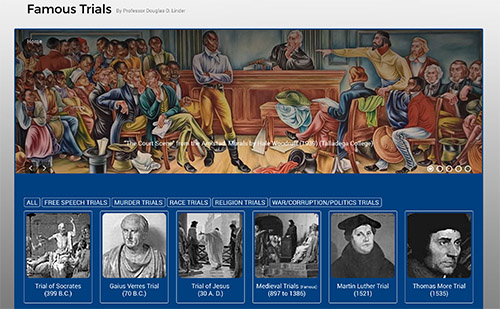
Check-out the new Famous Trials website at www.famous-trials.com:
|
United States Dictrict Court District of Kansas
Hugh W.
Speer, having been first duly sworn, assumed the
stand and testified as follows:
Direct examination by Mr. Greenberg: Q. Will you please tell
the Court your name? A. Hugh W. Speer. Q. And what is your
occupation? A. I am chairman of the
Department of Education at the
University of Kansas City. Q. Have you ever been in
public school work, Mr. Speer? A. Yes, I was in public
school work for Kansas for about
twelve years. Q. You mentioned the
Department of Education, University of
Kansas City, what is the function of the Department of Education? A. Our chief function at
this time is training elementary school
teachers. Q. Do you train teachers
eligible to teach in the state of
Kansas? A. Yes, a number of them
do. Q. How many members are on
the teaching staff of your
Education Department under your supervision? A. At the present about
twenty. Q. Do you have any other
responsibilities at your
university? A. Well, I am a member of
the President’s Advisory
Committee; I am chairman of the Curriculum Committee of the university.
Q. Do you regularly come
into contact with elementary
schools? A. Yes, we conduct an
elementary school of our own. We call
it the demonstration school in the summer. We do practice teaching in
the
public schools in our locality, which means we are in and out of
schools
constantly. Q. Would you tell us
something of your educational background,
Dr. Speer; where did you attend public school? A. Attended public schools
in Olathe, Kansas. Q. And what universities
dis you attend and what degrees do
you hold? A. I hold a Bachelor’s
Degree from American University in
Washington, D.C., a Master’s Degree from George Washington University,
and a
PhD Degree from the University of Chicago. Q. What was your major
field in your doctorate? A. Evaluation […] Q. Dr. Speer, have you
made any examination of the
elementary schools in Topeka? A. Yes. Q. When? A. During the last month. Q. Why did you make this
examination, Dr. Speer? A. At request of counsel
for plaintiffs. Q. What aspects of the
schools did you examine during the
examination? A. We examined the more
important aspects that we thought
had bearing on the major issues in this case. We have examined the
building,
the curriculum, the equipment, the library, the preparation and
experience of
the teaching staff and the salaries, the class loads, the size of
classes and a
few other minor points. Q. Now, I am going to ask
you some questions about your
findings. What did you find concerning the comparison of teachers in
the
colored schools with those of the white schools? A. I found minor
differences between the two groups, and
those differences tend to balance each other. For example, in
preparation, all
of the colored teachers have Bachelor’s Degree and all but 15% of the
white
teachers have Bachelor’s Degrees. On the other hand, in terms of
Master’s
Degrees, 12% of the colored teachers have Master’s Degrees and 15% of
the white
teachers hold Master’s Degrees. The colored teachers average twenty
years of
experience, and the white teachers nineteen years. Q. Dr. Speer, what did you
find concerning class size and
teaching load; would you explain to the Court what teaching load is? A. Teaching load is the
number of pupils which the teacher
has each day and, again, here I found not much difference. There is
some
difference at the kindergarten level where the colored kindergartens
are
somewhat smaller. I think the white average is 42; the colored average
about
25. But in grades 1 to 6, the average is very close together; 34 in the
white
schools and 32 in the colored schools. Again, I would say, I found no
significant difference in teacher load or teacher preparation. Q. In examining two sets
of schools, negro and white, did
you find any provisions for special rooms in any of these? A. I found provision for
two special rooms for white
children; I found no provisions for special rooms for any colored
children. Q. Now, did you study all
of the school buildings in Topeka,
Dr. Speer? A. Yes, we examined data
in the Board of Education files on
all school buildings, and we personally visited, Dr. Buchannan and I
and some
of my other assistants, we visited about two-thirds of the schools in
the city.
Judge Hill: If counsel
will let me interrupt, what do you
mean by special rooms? Mr. Greenberg: Well, if I
may explain, in the white schools
there are rooms for specially retarded or handicapped children, whereas
in
negro schools there are none. Judge Hill: Very well. […] By Mr. Greenberg: Q. Dr. Speer, in
making your evaluation, did you take into account the fact
that some
buildings might have some unused classrooms? A. Yes. Q. What significance
did you ascribe to that fact? A. Well, an unused
classroom is very limited value to the
school. We assume that most schools operate one class with one teacher,
can
profitably use one classroom. A. Yes, we did. Q. How many schools did
you inspect visually? A. We inspected I think it
was fourteen directly […] Q. In order to save the
time of the Court, Dr. Speer, did
you make any general observations that seemed to apply to all of the
buildings
you visited? A. Yes, I think I can.
First of all in regard to gymnasiums
and auditoriums, the facilities, all in all, seemed to be about equal
between the
colored schools and the white schools. Three-fourths of the colored
schools
have a combined gymnasium-auditorium, and we would say approximately
that
proportion of the white schools have similar facilities. However, I
should add
that none of the colored schools have anything like the luxurious
facilities we
would find in the Oakland building or the State Street building or the
Gage
Building, for example. Q. How do the various - A. Might I, if I may - Q. Go ahead. A. - add one or two other
general observations to save time.
The buildings are all well-kept, well preserved, and I think well
maintained.
Dr. Buchannan and I felt that was equal throughout the system. Q. How do the buildings
compare as to their ages, Dr. Speer? A. The ages of the white
buildings average twenty-seven
years, according to the figures furnished by the board, and the ages of
the
colored buildings thirty-three years. In other words, the white
buildings
average six years newer. However, I think we should add another feature
here.
Inasmuch as newer building tend to be larger, we found this to be the
case,
that according to last year’s enrollment figures, 45% of the white
children
attend schools that were newer than the newest colored buildings,
whereas 14%
of the white children attend schools that were older than the oldest
colored
building. To state another kind of comparison, 66% or two-thirds, of
all white
children attend schools that are newer than the average age of the
colored
buildings. Q. Dr. Speer, how do the
colored schools compare to the
white schools in regard to the insured value per available classroom? A. The average of the
white schools is $10,517, and the
average for the colored schools is $6,317. Or, stated another way, the
insured
value per available classroom is 66% higher in the white schools. Q. Dr. Speer, did you
examine the curriculum in the schools
in the City of Topeka? A. Yes. Q. Tell the Court what you
mean by “curriculum”, also. A. By “Curriculum” we mean
something more than the course of
study. As commonly defined and accepted now, “curriculum” means the
total
school experience of the child. Now, when it comes to the mere
prescription of
the course of study, we found no significant difference. But, when it
comes to
the total school experience of the child, there are some differences.
In other
words, we consider that education is more than just remembering
something. It
is concerned with the child’s total development, his personality, his
personal
and social adjustment. Therefore it becomes the obligation of the
school to
provide the kind of an environment in which the child can learn
knowledge and
skills such as the three “Rs” and also social skills and social
attitudes and
appreciations and interests, and these considerations are all now part
of the
curriculum. Q. I see, Dr. Speer. Do
you have anything further to say? A. Yes. And we might add
the more heterogeneous the group in
which the children participate, the better than can function in our
multi-cultural and multi-group society. For example, if the colored
children
are denied the experience in school of associating with white children,
who
represent 90% of our national society in which these colored children
must
live, then the colored child’s curriculum cannot be equal under
segregation.
[…] By Mr. Greenberg: Q. Would you tell us what
you found concerning Monroe
school? A. Monroe. Colored
building is twenty-four years old; it’s
valued at $9,760. This is, in our judgment, the best of the colored
buildings.
It’s well constructed, has tile floors. Again, however, many of the
books are
too old for good school use. The site is rather small, and the building
and the
site are not very attractive […] Q. Would you tell the
Court what you found concerning Sumner
School. A. Sumner School is white,
aged fifteen years, value $15,936
per room. It’s another excellent building; beautiful auditorium, a
large good
gymnasium, has its public address system; the books are good; very
attractive
kindergarten. Again, the facilities are available for an excellent
educational
opportunity […] Q. Now, Dr. Speer, you
have gone through all the schools in
the City of Topeka, and I would like to ask you some hypothetical
questions
which I would like you to answer on the basis of your study of the
schools in
the City of Topeka and on the basis of you r knowledge and experience
as an
educator. I want you to assume the
following set of facts, Dr. Speer;
That a negro child who lives in Topeka, where there are racially
segregated
schools, attends the Buchannan School, although if they were not
racially
segregation in the City of Topeka, because of where he lives, he would
otherwise attend the Randolph School, would you say that on the basis
of the
evidence you have given above and the other factors I have mentioned,
that he
obtains the same educational opportunities at Buchannan that he would
obtain if
he attended Randolph? Mr. Goodell: To which we
object as the hypothetical question
assumes a fact not proven, and the fact assumes another fact that is
contrary
to some evidence. The fact assumes that if a child lived at Randolph
and there
wasn’t racial segregation he would attend Randolph. It assumes that
fact. It
isn’t necessarily so. The child, even if you didn’t have segregation,
might not
prefer to go to some school where he is outnumbered fifty to one.
Object to the
question in the present form because it assumes a hypothetical fact
unsupported
by any evidence. Judge Huxman: You may
answer, Doctor. The witness: The question,
as I understand it - Mr. Greenberg (to
reporter): Would you read it back, please? (The last preceding
question was read by the reporter.) By Mr. Greenberg: Q. What is your answer to
that question, Dr. Speer? A. No, I would say he
would not get the same educational
opportunity for some of the following reasons: First of all, the
Buchannan
building is an older building; it’s thirty years old; Randolph is
twenty-for
years old. The insured value per classroom for Buchannan is $5,623; for
Randolph it’s $6,947. To look at some of the details of the buildings,
Buchannan has no combined gymnasium-auditorium; Randolph has one that
is not
completely adequate but it will hold several grades at one time. The
furniture
- Mr. Goodell: Pardon me, I
want to impose another objection,
that this has no probative force to show denial of equal protection of
the law
on this sort of comparison because he is now demonstrating that because
- that
an inequity exists because some physical plants are newer and bigger
and better
than other physical plants. He is comparing, it’s true, with a colored
plant,
but he is also in other parts of his testimony - he has shown that the
same
disparity exists between many white schools as to the newer school
where we
have very old schools, very low cost per capita per room, classroom,
and also
the testimony very obviously shows no school system in the world could
have
buildings equal because newer buildings necessarily incorporate modern
facilities not known when they were builttwenty or thirty years ago. Mr. Greenberg: May I
answer that, your honor? Mr. Goodell: I address
that to the Court, not you. Mr.
Greenberg: I
didn’t ask you if I could answer it. Judge Huxman: The witness
may answer. The witness: Proceeding,
on the other hand, we might say
that the Randolph building has these
features, a much more attractive kindergarten room, more spacious
playground,
much more attractive surroundings which adds to its aesthetic educational value, and I would add, if I may
consult my notes for a moment here - Mr. Greenberg: Go ahead. The witness: That the
books in the Randolph school are
better than the books in the Buchannan building, in my judgment. There
are
better heating and lighting in the Randolph building, and I think I
would add,
Your Honor, that most important of all the curriculum in the Randolph
building
provides a much better educational opportunity than the one in the
Buchannan
building, because, in the Randolph building, the colored child would
have
opportunity to live with, work with, to cooperate with white children
who are
representative of approximately 90% of the population of the society in
whuch
he is to live […] By Mr. Greenberg: Q. I would like to ask you
the same question concerning a
comparison of Sumner and Monroe schools, Dr. Speer. A. Sumner and Monroe.
Again I would say for some of the same
kinds of reasons that the Sumner building would provide a better
educational
opportunity. Judge Huxman: May I ask
the doctor a question? Mr. Greenberg: Yes. Judge Huxman: To be sure I
understand his answer, is one of
the reasons which is common to all three of these, your reason that
they are by
segregation denied in all three of these schools the opportunity ot
mingle and
live with the white children, which they would otherwise have and that,
to you,
is an important factor, is that part of your answer? The witness: Yes, Your
Honor, that would enter all of them. Judge Huxman: I was quite
sure that was it, but I wanted to
be clear in my own mind that that was part of your answer in all of
these
schools […] Cross examination, By Mr. Goodell: Q. Dr. Speer, if I
understand your testimony correctly,
boiled down to - as to the physical facts on the comparison of
buildings and
facilities feature of it, eliminating the racial feature, is it your
opinion
that any school, white school, that is considerably older and inferior
and a
wide disparity as to modern facilities, that that child going to such a
white
school is likewise being denied an equal opportunity of education? A. It is unequal in
another sense, I would say, if I
understand your question correctly. Would you mind repeating the crux
of it; I
am not sure that I understand you. Q. What I am trying to say
is, eliminating the racial
feature and restricting your opinion entirely to comparison of plants,
facilities, and accessories, will you still say that a child, a white
child,
who goes to one of these other schools, such as Lafayette, Quinton
Heights,
Polk and some of these old schools, and Lowman, are denied equal
educational
opportunities as against children - as compared to children who live in
a
territory such as Oakland and Randolph and Potwin and get to go to
those new
schools. A. A child might be -
might have an inferior educational
opportunity in some respects, but he would not have the stigma of
segregation,
nor be denied the opportunity to mix with the majority group of the
population.
Also - Q. I said eliminating that
feature of it. Other than that,
do you consider that it’s an inferior opportunity as far as the white
child is
concerned so that he is denied an equal opportunity of education,
elimination
the racial thing. A. It might be if all
other facilities are equal, but that
is an accident of geography. Q. Well, you made
comparisons between some of the best white
schools we have here in town to the colored schools, haven’t you? A. Yes, sir. Q. Now, while we are on
the subject, I will ask you to turn
to exhibit “K”, which is the Board of Education’s record pertaining to
the
original cost of these buildings and also in the same connection - A. I don’t have a copy of
that here, sir. Q. I will step over here
and let you see it. What I have
marked on my copy here in red are the negro schools; and what I have
marked in
the blue pencil are the white schools, you understand? A. Yes, sir. Q. Now, I will direct you
attention, if the schools that
were built about the same time, the white schools, as the colored
schools, if
this exhibit doesn’t show the same - practically - outlay of cost and,
in some
instances, more money spent for structural, or the school, and land
acquisition
than there were for white schools that were built at the same period of
time. A. I think that may be
possible […] Q. Do you know of any
school system in the United States -
not just Topeka - in the United States, that has buildings that are
equal, that
there isn’t great differences based upon when they were built and the
need of
the community at the time they were built? That has not - doesn’t have
great
differences as to their value and commodious quarters and characters
that are
recognized now in modern education and that are applied in modern
buildings,
that doesn’t have great disparities, those types of building, in any
school
system in the United States with buildings built twenty, thirty, or
forty years
ago. A. I believe there is very
likely to be some disparity, may
not be great, and may not be as great as compared this group to that
group, but
between individual buildings, I am sure you would find some disparity
if there
is more than one building. Q. You realize that school
buildings are built as a
community grows up and population trends - where the town grows and
which way
it grows determines whether buildings are located and newer buildings
are
added. A. That is one factor. Q. Do you know of any way
way on earth to keep those
facilities adequate and at the same time equal to any school in the
system? A. There are ways that can
be approached. Q. Well, just tell me how
you would approach it. A. By
forming a good cooperative city planning with the Board of Education
and the
City Commissioners on a long-term scale and then following it. Q. Would you recommend
that if we had a building like, say
in Topeka, that cost $112,000 and is now a sound and structurally safe
colored
building, that you would tear that down because we happen to have a new
building built a year ago that cost half a million dollars; would you
recommend
that? A. Not merely for that
reason, no. Q. What other reasons
would you give for tearing it down? A. If I found that
throughout the community the colored
children’s buildings were decidedly inferior to the buildings of the
white
schools, then I would consider that to be an unequal educational
opportunity
between the groups […] Q. Maybe I am so stupid I
can’t understand you. Did you not
say, is it your opinion, that because of physical factors, and I mean
physical
factors differences in plant facilities, some of the white schools and
the four
negro schools, that alone, in and of itself, causes you to give an
opinion, and
it is your opinion that the child, a negro child, because of that
alone,
doesn’t have equal educational opportunity. A. That is a contributing
factor, but I do not consider that
of - that alone. Q. Then you didn’t say
that alone caused him to have an
unequal opportunity. A. No, but coupled with
other factors did cause him to have
an unequal opportunity. Q. What are the other
factors rather than racial factors? A. Curriculum factor;
there is faculty; there is size of
classrooms; there is books […] Q. What do you mean by
total curriculum? A. I mean the total school
experience of the school child,
what the instructions, what the books are, what the surroundings of the
buildings are, what his associations with the other children are. Q. Well, eliminating that
feature, the associations with
other children, which is the racial feature, what are the other part of
the
curriculum which is any dissimilarity or inferior factors present in
the case
of the negro schools and the white schools I have used for illustration? A. In professional circles
we have a term called the great
“gestalt” which means the sum is greater - the whole is greater than
the sum of
it’s parts and when we start taking into account only the parts one by
one, we
destroy our “gestalt”, and we cannot make a wise comparison. Judge Mellott: What was
that word? The witness: (spelling)
Gestalt.
Cross-examination by Mr. Goodell: Q. Now, you come from
Missouri, don’t you? A. I at present live in
Missouri, yes, sir. Q. You have segregated
schools there, don’t you? A. We have some segregated
schools. On the university campus
we have a mixed school. Q. I am talking about the
public school system in the State
of Missouri. A. Yes, sir. Q. And it is mandatory,
isn’t that right? A. I presume in some cases
it is. Q. Have you studied any of
the various state statutes over
the country which we have had for a half century concerning this
segregation of
students? Mr. Carter: Your Honor, I
can’t see how this - Mr. Goodell: This is the
preliminary for another question. Judge Huxman: I think that
is an improper question. Well, as
long as it is preliminary, you may answer whether or not you have
studied the
various statutes. Mr. Goodell: I will
withdraw the question. By Mr. Goodell: Q. You know in a great
many cities and communities of the
United States there are statutes similar to the statutes here in
Kansas, which
we have had for half a century or three-fourths of a century, isn’t
that right? A. I presume so. Q. You know, as a
practical man, laws get passed by
legislators coming from the various parts of their communities over the
state,
don’t you? A. Yes, sir. Judge Huxman: Mr. Goodell,
what is the purpose of that
question? What value does that have to our problem how laws are passed? Mr. Goodell: I am getting
to that. I can’t ask all of it at
once. I am trying to get from this witness the feature as to whether he
thinks
the elimination of racial segregation, if it’s unwanted by the
community and is
out of step with the thinking of the community which the mere existence
of the
laws have some indication - Judge Huxman: I think Dr.
Speer has made it quite clear from
his evidence - he has to me at least, if I understand it - that
segregation,
racial segregation, is the prime and controlling factor of the equality
of the
whole curriculum, and these physical factors are secondary, and that
his
testimony, as it registers with me, is that aside from racial
segregation he
perhaps would not testify that there was any such inequality in the
physical
properties as would deny anybody and equal educational opportunity. Do
I
understand your testimony correctly? The witness: If I may say,
Your Honor, I think I would sum
it up this way: That there is, in my opinion, some inequality in
physical
facilities between the groups in Topeka, but, in addition to that,
there is
also the difference of segregation itself which affects the school
curriculum. Judge Huxman: Let’s see if
I can get myself straightened
out. Do you not also agree with what Mr. Goodell is trying to bring out
here -
you haven’t gotten it together - that if you put it on that fact, that
there is
no inequality in physical facilities as between the white schools and
the
colored schools, sometimes the greater facilities are with the colored
schools
. The witness: Yes, Your
Honor, but there are not as many in
that direction as there are in the other direction in this case. Judge Huxman: It seems to
me that we are spending a lot of
time on that when that is rather, it seems to me, it would be obvious
if you
have an older white building than a colored building that perhaps the
physical
facilities in the older white building would be poorer than in the
colored
building. The witness: Yes, I will
agree. Mr. Goodell: I will try to
shorten this up. By Mr. Goodell: Q. If I understand you
correctly, the basis of your opinion
on saying that the mere separation - strike that. It’s you r opinion,
then,
that you can’t have separate schools in any public school system and
have
equality, is that right? A. Yes. Q. And that is predicated
on the - on your philosophy or
your theory that merely because the two races are kept apart in the
educational
process, isn’t that right, mere separation causes inequality? A. That is one of the
things which causes inequality, yes, sir.
Q. Yes. Now, assuming,
Doctor, that we didn’t have separate
schools and they were altogether, and you still had a social situation
in this
community which didn’t recognize co-mingling of the races, didn’t admit
them on
free equality, that child would run against those - run up against
those things
in his practical every-day world, wouldn’t he? A. I presume so. Q. Sir? A. I would think so. Q. Wouldn’t that tend to
cause more of a tempest and
emotional strain or psychological impact if he got used to going to
school with
white children than when he went downtown ad couldn’t eat in a white
restaurant, couldn’t go to a white hotel, and couldn’t do this and
that,
wouldn’t that make the impact greater and accentuate that very thing? Mr. Greenberg: This
witness is qualified as an expert in the
field of education, and I don’t believe has testified or is qualified
to
testify concerning segregation all over the State of Kansas or
Elsewhere. Mr. Goodell: Well, I
restrict it to Topeka. Judge Huxman: I think the
Court will sustain the objection.
That is purely argumentative. I doubt whether the doctor has qualified
himself.
By Mr. Goodell: Q. Assuming, Doctor, we
will restrict this to the
educational process, assuming that - that we didn’t have segregation,
for the
purpose of this question, and assuming further we had a negro child
going to
Potwin or Oakland or Randolph and assuming that the population trend
appears in
the schoolroom as it does in our city, so that he would be outnumbered
fifty to
one, assuming all that, for the purpose of this question being true,
wouldn’t
that cause some sense of inferiority feeling on the part of the colored
child
when he went to such a school where he was outnumbered twenty to fifty to one and caused some sort of
mental disturbance and upset? A. On which basis would
you rather for me to - on theory or
on personal observation or experience? Q. I am talking about
theory here. A. And personal
observation and experience? Q. Yes. A. Let me first mention
the latter one; we have adjoining
our campus a demonstration school of 210 students in the elementary
grades and
mixed in with them are about ten negro children, so they are
outnumbered in
that proportion, and my observation is, and the reports I receive from
my
assistants are, that those children are very happy, very well adjusted,
and
that they are there voluntarily. They don’t have to attend. Mr. Elisha Scott: I object
to that. Judge Huxman: Mr. Scott,
are you entered here as an attorney
of record? Mr. Elisha Scott: I am
supposed to be. Judge Huxman: Go ahead. Mr. Elisha Scott: I object
to that because he is invading
the rights, and he is answering a question not based upon the evidence
adduced
or could be adduced. Judge Huxman: Objection
overruled. You may answer. The witness: Shall I
repeat the answer? By Mr. Goodell: Q. Have you finished? A.
I think, also, on
the basis of our knowledge of child behavior that we can say on a
short-range
there may be occasionally, the first time we jump in the water we may
be a little
frightened, but, on a long-range basis, we generally are able to work
out our
adjustments and make a good situation out of it. Q. Segregation occurs,
doesn’t it, Doctor, in any school
system among the races. I mean by that, children that come from wealthy
families co-mingle with children from poor families; they go off into
different
cliques; that occurs, doesn’t it? A. It occurs sometimes. Q. Occurs frequently,
doesn’t it? A. Well, it all depends on
your definition. Q. And the child that is
left out of the swim, so to speak,
he feels inferior or second-class, doesn’t he? A. Yes, and I think we
should prevent that in all cases
possible. Q. You wouldn’t make a new
social order to prevent that
social strata of society, would you? Judge Huxman: Just a
minute, the Court will sustain an
objection to that question. By Mr. Goodell: Q. Have you made a survey
of any students that have gone to
our segregated schools, the negro students, and picked them up to see
what
effect to their education that you call attention to being inferior,
hoe its
worked out in every-day life? A. I have talked to a few
of them, but I have not made a
survey of them. Q. Have you heard of
anybody getting hired or a professional
man having a plant or a businessman having a customer based upon what
elementary school he went to in the first grade or the second grade or
the
sixth grade for that matter? A. Oh, probably not, but
probably there are cases where a
person is hired or not hired on the basis of the kind of education he
received
in the first six grades. Q. You don’t know a thing
about our community and how the
negro child, when he goes through our school system, how he is received
by the
business world at all, do you? A. Oh, I have known Topeks
for some years. I may have a
little knowledge. Q. Do you know anything
about that? A. A little, not much. Q. What? A. I don’t know much about
it. Q. Do you know that in the
case of the junior high grades
and the senior high grades that they are not segregated? A. Yes, sir. Q. Do you think, getting
back to the school system and the
illustration of where the negro child would go to a school where he
would be
outnumbered twenty to fifty to one, and he wasn’t recognized because of
pure
majority rule and wasn’t elected head of his class or class officers,
or
recognized in various school activities, that that would have any
impact on
such a child? A. Not as much impact as
having been denied even to get into
the running. Q. Do you think that if
you got in the school and left out
entirely he would feel happy about it, would he? A. What’s that again? Q. You think if the negro
child was simply be edict law
forced into the white school, whether the white school was ready to
receive him
or not, and however much he was in the minority and however much he
would be
left out of things, he would still be happy merely because he had found
his way
into the white school, isn’t that right? |