×
Check-out the new Famous Trials website at www.famous-trials.com:
|
United States Dictrict Court District of Kansas 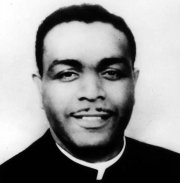 Oliver Brown Direct examination by Mr. Bledsoe: Q: You may state your name
to the Court, please. A: Oliver Leon Brown Q: And where do you live,
Mr. Brown? A: 511 West Fifth Street Q: Are you a citizen of
the United States? A: I am. Q: And you are a plaintiff
in this lawsuit? A: I am. Judge Huxman: Talk a
little louder, Mr. Brown. Judge Mellott: He didn’t
answer yet. The Witness: Yes. By Mr. Bledsoe: Q: What is your business
or occupation? A: Carman welder. Mr. Bledsoe: Speak a
little louder. The Witness: A carman
welder. Judge Huxman: Mr. Brown,
it’s difficult to hear you. I wish
you would make an effort to speak so we can hear you distinctly; we
want to
hear what you have to say. By Mr. Bledsoe: Q: Are you married? A: Yes. Q: And, if so, who
constitutes the members of your family? A: I do. Q: What I mean by that,
who constitute the members of your
family? A: I have a wife and three
children. Q: What are the ages of
your children? A: My oldest daughter is
eight years old; I one four and
another one five months. Q: What is the name of
your daughter, oldest daughter? A: Linda Carol Brown. Q: In what school district
or territory do you live, Mr.
Brown? A: I live in the Sumner
District. Q: Sumner School District. A: Yes. Mr. Bledsoe: For the
purpose of the record, if the Court
please, let it be shown that the witness resides in the Sumner School
district.
I think it’s this district here (indicating on exhibit) - that is
colored red. Judge Mellott: Well, I am
afraid your testimony standing
alone isn’t too intelligent; it isn’t to me. Now, as I understand it,
Topeka is
one school district, you agreed at pre-trial, but you said there were
certain
territories. Mr. Bledsoe: Well, may I
substitute territory for - if I may
- territory for district. Judge Huxman: Wouldn’t it
be more helpful to the Court if
you just had these witnesses locate their residence with reference to
the
colored school that they attend, rather than having it defined by the
various
territories. That is the important factor, how far they are from school. By Mr. Bledsoe: Q: Now, Mr. Brown, where
do you live with reference to the
Monroe School? A: Well, - I stated that I
lived at 511 West First Street
which is 15 blocks, approximately, from Monroe School. Mr. Goodell: I didn’t get
that. Judge Mellott: Fifteen
blocks from Monroe school. The Witness: Twenty-one
blocks, pardon me; approximately
twenty-one blocks. By Mr. Bledsoe: Q: You are talking about
now the way your daughter has to
travel to go to Monroe School, is that correct? A: That is true. Q: Does your daughter ride
the school bus? A: Yes. Q: All right. Now, Mr.
Brown, what time does your daughter
leave home in the morning to walk to First and Quincy, the bus pick-up
point,
to go to school; what time does she leave home? A: She leaves at twenty
minutes ‘till eight o’clock. Q: Twenty minutes of eight. A: Every school morning. Q: What time, or
thereabouts, does she board the bus at
First and Quincy? A: Well, she is supposed
to be there at eight o’clock and
which she has been, in many instances, but many times she has had to
wait
through the cold, the rain and the snow until the bus got there, not
knowing
definitely what time it gets there all the time. A: All right. Now, Mr.
Brown, she boards the bus about eight
o’clock. What time does she arrive at the school? A: She’s supposed to
arrive at the school around 8:20. Q: Eight thirty. As I
understand it, what time do classes
begin at school? A: Nine o’clock. Q: What does your daughter
do between the time the bus
arrives at school at 8:30 and 9:00 o’clock? A: Well, there is
sometimes she has to wait outside the
school until someone came to let them in, through the winter season and
likewise, many times. Q: What else does she do,
if anything? A: Well, there is nothing
she can do except stand out and
clap her hands to keep them warm, or jump up and down. They have no
provisions
at all to shelter them. Q: And what you want the
court to understand is that your
daughter is conveyed to the school, she gets there by 8:30 in the
morning, and
that she has nothing to do until school starts at 9:00 o’clock, is that
right? A: That is correct. Q: Now, Mr. Brown, you
don’t - withdraw that please, what
provisions are made by the school board for your daughter to have a
warm lunch,
if any? A: There are no provisions
made at all. Judge Huxman: Mr. Bledsoe,
hasn’t it been agreed and
testified to by Dr. McFarland that no provision is made for warm
lunches. Mr. Bledsoe: I beg your
pardon; I believe you are correct,
if the Court please. Judge Huxman: That stands
admitted, doesn’t it? Mr. Bledsoe: That’s right;
that is all right. Let me
withdraw that, please. By Mr. Bledsoe: Q: Now then, your child -
you don’t get to see your child
during the daytime until she returns home in the evening, is that right? A: That is correct, sir. Q: Would you, Mr. Brown,
would you like to have your
daughter home, have the same opportunity of giving her parental
guidance as the
white fathers and mothers might do their child? A: Yes, sir. Mr. Goodell: We object to
the form of that question as
assuming a state of facts not in evidence and, in fact, contrary to
some of the
admitted stipulation of facts. Judge Huxman: The
objection will be sustained. By Mr. Bledsoe: Q: But you do not see your
daughter from the time she leaves
in the morning until she returns home in the evening, is that correct? A: I do not. Q: What time is that? A: She gets home around
fifteen minutes to five. Q: Fifteen minutes to
five. Do you know whether or not there
is any provisions made to shelter or protect your daughter while she is
standing on the street or the designated bus pick-up -- Judge Huxman: Mr. Bledsoe,
that has been testified to, and I
think it’s conceded no shelter is provided in any of these points where
colored
children are picked up, is that not so, Mr. Goodell? Mr. Goodell: That’s right. By Mr. Bledsoe: Q: now, Mr. Brown, what is
the condition of the area there
between your residence and First and Quincy where your daughter boards
the bus? A: Well, there are a
considerable amount of railroad tracks
there; they do a vast amount of switching from the Rock Island Yards
and from
the time she leaves home until she gets to Quincy, First and Quincy, to
board
the bus, she has to pass all of those switch tracks and she - also
including
the main thorough-fare, Kansas Avenue and First; there is a vast amount
of traffic
there morning and evening when she goes and returns. There is no
provisions at
all made for safety precautions to protect those children passing these
thorough-fares at all. Q: Now, Mr. Brown, if your
daughter were permitted to attend
Sumner School, would there be any such obstructions or any such
conditions as
she will meet on her way to First and Quincy. A: Not hardly as I know
of. Q; How far is your
residence to Sumner School? A: Seven blocks. Q: Seven blocks. Mr.
Brown, are you assessed a tax for the
support and maintenance of the public schools of the City of Topeka? A: I am. Mr. Goodell: We object, if
the Court please; it’s wholly
outside the scope --- Judge Huxman: He may
answer. The Witness: I am, sir. By Mr. Bledsoe: Q: Mr. Brown, do you
consider it an advantage to have a
school in the neighborhood in which you live near your home? Do you
consider
that an advantage? Mr. Goodell: We object to
that as incompetent, irrelevant
and immaterial what her considers. Judge Huxman: Objection
sustained. Mr. Bledsoe: If the Court
please, I believe that really is
part of our case. Mr. Goodell: If the Court
please, every parent would like to
have a school next door, but that is impossible. Judge Huxman: I think it
flows naturally it’s an advantage
to live closer to a school than to have one far away. I don’t think we
need to
spend much time establishing that fact. I think the Court will take
judicial
knowledge of the fact that if it had children of school age it would
rather
have them go to a close school than one far away. By Mr. Bledsoe: Q: Mr. Brown, is there a
more direct route from your
residence, 511 West First Street, to the bus pick-up point at First and
Quincy;
is there a more direct route than there? A: Thank just my family,
do you mean? Q: No, for your daughter
going down to the bus pick-up
point, is there a more direct route for her to travel? A: No, there isn’t Q: There is not. Judge Huxman: Any
questions?
Cross Examination by Mr. Goodell: Q: Mr. Brown, you see that
map there, Defendant’s Exhibit
“A”? A: I do. Q: Do you understand that
the portions colored there from
the school territory for the whole city of Topeka? A: I do. Q: And, directing your
attention to the corner here or all
the area in blue, you understand that is the territory outside of the
city
limits of Topeka, but in Topeka for school purposes alone? A: I understand. Q: What? Q: You say your child goes
four blocks to the bus pick-up
point? A: She goes six blocks to
the pick-up point. Q: Six blocks, pardon me.
Don’t you know as a matter of fact
that in many, many instances there are children that go to white
schools in
this town that go thirty and thirty-five blocks and walk to get there. Mr. Carter: I object to
that. The Witness: Where at? Mr. Carter: I see no
materiality to this question. Judge Huxman: Objection
will be sustained. That is not a
proper cross-examination of this witness. Mr. Goodell: No further
questions. |